CE RED Wireless Certification in the European Union

The CE RED (Radio Equipment Directive) certification is a mandatory process for wireless devices seeking to be sold and used within the European Economic Area (EEA). It ensures that radio equipment complies with the harmonized standards and safety requirements set by the European Union.

The CE RED certification is based on the Radio Equipment Directive (RED), which aims to harmonize the spectrum usage, improve its efficiency, and avoid harmful interference while protecting the health and safety of individuals as well as property. The directive covers a wide range of wireless devices including mobile phones, Wi-Fi equipment, bluetooth devices, radio frequency remote control equipment, and broadcast equipment.

To obtain CE RED certification, manufacturers must demonstrate that their radio equipment meets the essential requirements outlined in the directive. This involves submitting technical documentation, undergoing conformity assessment procedures, and ensuring that the product carries the CE marking.

The CE marking is a declaration of conformity, indicating that the product meets all the relevant European Union directives and regulations. It serves as a passport for the product to enter the European market, ensuring free movement within the EEA.

The CE RED wireless certification process ensures consumer safety, protects against harmful radio emissions, and maintains the integrity of the radio spectrum in the European Union. It is an essential requirement for manufacturers looking to market and sell their wireless devices in the European Union, as it provides a level playing field and ensures compatibility with other devices operating within the region.

We provide various European wireless products with CE RED Certificates (The Radio Equipment Directive (RED) 2014/53/EU ). If you have any relevant needs, feel free to contact us.
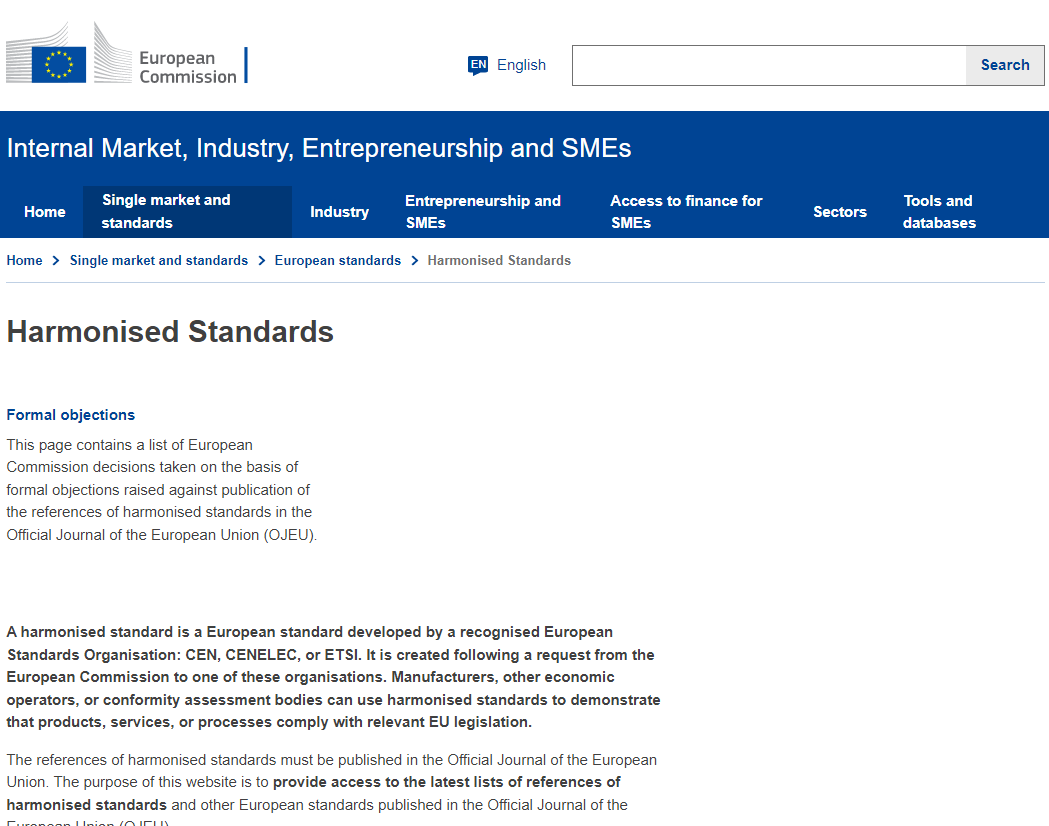
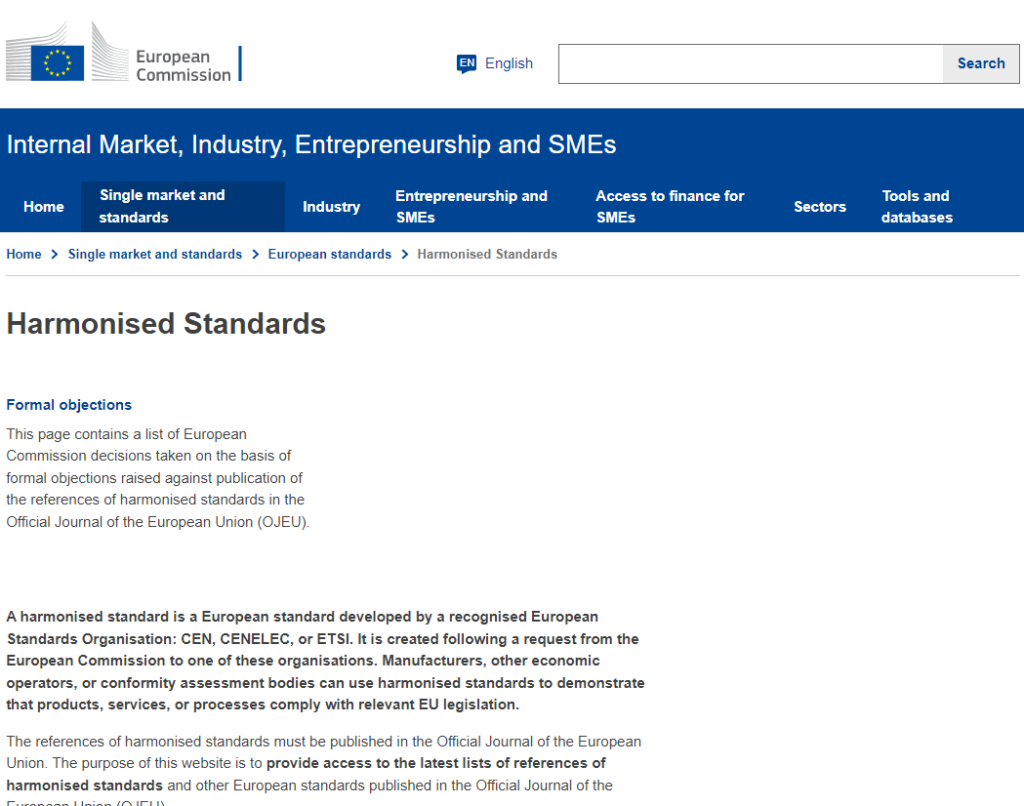
Harmonised Standards

Formal objections

This page contains a list of European Commission decisions taken on the basis of formal objections raised against publication of the references of harmonised standards in the Official Journal of the European Union (OJEU).

A harmonised standard is a European standard developed by a recognised European Standards Organisation: CEN, CENELEC, or ETSI. It is created following a request from the European Commission to one of these organisations. Manufacturers, other economic operators, or conformity assessment bodies can use harmonised standards to demonstrate that products, services, or processes comply with relevant EU legislation.

The references of harmonised standards must be published in the Official Journal of the European Union. The purpose of this website is to provide access to the latest lists of references of harmonised standards and other European standards published in the Official Journal of the European Union (OJEU).

References of harmonised standards and of other European standards published in the OJEU

Accessibility

  • Websites and mobile applications of public sector bodiesSearch for available translations of the preceding

Chemicals

  • Chemical substances (REACH)Search for available translations of the preceding
  • Explosives for civil usesSearch for available translations of the preceding
  • Pyrotechnic articlesSearch for available translations of the preceding

Conformity assessment and management systems

  • New Legislative Framework (NLF) and Eco-Management and Audit Scheme (EMAS)Search for available translations of the preceding

Construction

  • Construction products (CPD/CPR)Search for available translations of the preceding

Consumers and workers protection

  • Cosmetics productsSearch for available translations of the preceding
  • General product safetySearch for available translations of the preceding
  • Personal protective equipment (PPE)Search for available translations of the preceding
  • Toys safetySearch for available translations of the preceding

Energy efficiency

  • Ecodesign and energy labellingSearch for available translations of the preceding

Electric and electronic engineering

  • Electromagnetic compatibility (EMC)Search for available translations of the preceding
  • Equipment for explosive atmospheres (ATEX)Search for available translations of the preceding
  • Low Voltage (LVD)Search for available translations of the preceding
  • Radio Equipment (RED)Search for available translations of the preceding
  • Restriction of the use of certain hazardous substances (RoHS)Search for available translations of the preceding

Healthcare engineering

  • In vitro diagnostic medical devices (Regulation 2017/746)Search for available translations of the preceding
  • Medical devices (Regulation 2017/745)Search for available translations of the preceding
  • Active implantable medical devices (Directive 90/385/EEC)Search for available translations of the preceding
  • In vitro diagnostic medical devices (Directive 98/79/EC)Search for available translations of the preceding
  • Medical devices (Directive 93/42/EEC)Search for available translations of the preceding

Measuring technology

  • Measuring instruments (MID)Search for available translations of the preceding
  • Non-automatic weighing instruments (NAWI)Search for available translations of the preceding

Mechanical engineering and means of transport

  • Cableway installations designed to carry personsSearch for available translations of the preceding
  • Equipment for explosive atmospheres (ATEX)Search for available translations of the preceding
  • Gas appliances (GAR)Search for available translations of the preceding
  • Inspection of pesticide application equipmentSearch for available translations of the preceding
  • LiftsSearch for available translations of the preceding
  • Machinery (MD)Search for available translations of the preceding
  • Pressure equipment (PED)Search for available translations of the preceding
  • Rail system: interoperabilitySearch for available translations of the preceding
  • Recreational craft and personal watercraftSearch for available translations of the preceding
  • Simple Pressure Vessels (SPVD)Search for available translations of the preceding
  • Unmanned aircraft systems (UAS)Search for available translations of the preceding

Services

  • Community postal servicesSearch for available translations of the preceding

Sustainability

  • Packaging and packaging wasteSearch for available translations of the preceding

Use of harmonised standards

The use of these standards remains voluntary. Manufacturers, other economic operators, or conformity assessment bodiesSearch for available translations of the preceding linkEN••• are free to choose another technical solution to demonstrate compliance with the mandatory legal requirements.

Within the context of some directives or regulations, voluntary European standards supporting the implementation of legal requirements are not called “harmonised standards”. This legislation is also included in this information service if:

  • legislation foresees a need for a Commission standardisation request to European Standards Organisations;
  • publication of references in the Official Journal of the European Union is foreseen as a precondition for presumption of conformity or for other legal effect.

Official website : https://ec.europa.eu/growth/single-market/european-standards/harmonised-standards_en

CE certification

We can provide customers with CE certification for various electronic and electrical products.

Not limited to Electromagnetic compatibility (EMC) DIRECTIVE 2014/30/EU, Radio Equipment (RED) Directive 2014/53/EU,Low Voltage (LVD) Directive 2014/35/EU,Restriction of the use of certain hazardous substances (RoHS) Directive 2011/65/EU.

CE-certification
CE-certification

EMC – Electromagnetic compatibility – DIRECTIVE 2014/30/EU

Multimedia EMC standards

EN IEC 61000-3-2:2019
EN 61000-3-3:2013/A1:2019
EN 55032:2015/A11:2020
EN 55035:2017 or EN 55024:2010/A1:2015

Home appliances EMC standards

EN IEC 61000-3-2:2019
EN 61000-3-3:2013/A1:2019
EN 55014-1:2017
EN 55014-2-2015

Lamps EMC standard

EN IEC 61000-3-2:2019
EN 61000-3-3:2013/A1:2019
EN 55015:2013+A1:2015
EN 61547:2009

RED – Radio Equipment – Directive 2014/53/EU

For Bluetooth wireless products, what standards are required for European wireless RED certification?

RF (intentionally radiated radio frequency part)

  • EN 300328 V2.2.2
  • EN 301489-1 V2.2.3
  • EN 301489-17 V3.2.2

EMC (Unintentional emission part, according to different products, different product standards are used, the following is an example of Bluetooth speakers)

  • EN IEC 61000-3-2:2019
  • EN 61000-3-3:2013/A1:2019
  • EN 55032:2015/A11:2020
  • EN 55035:2017 or EN 55024:2010/A1:2015

LVD (Low Voltage Directive, choose one of the following two)

  • EN 62368-1:2014+A11:2017
  • or
  • EN 60950

EMF

  • EN 62479:2010

European WIFI test standard

RED Radio Frequency RF Standard

  • EN 300328 V2.2.2(For 2.4GHz)
  • ETSI EN 301 893 V2.1.1(For 5GHz)
  • EN 301489-1 V2.2.3
  • EN 301489-17 V3.2.2

If it is embedded in a certain type of product, it needs to meet the corresponding product standards. For example, multimedia products need to meet:

EMC standards

  • EN IEC 61000-3-2:2019
  • EN 61000-3-3:2013/A1:2019
  • EN 55032:2015/A11:2020
  • EN 55035:2017 or EN 55024:2010/A1:2015

There are also safety standards corresponding to the LVD directive. For example, multimedia products need to meet: EN 62368-1

LVD (Low Voltage Directive, choose one of the following two)

  • EN 62368-1:2014+A11:2017
  • EN 60950

EMF

  • EN IEC 62311:2020

You are welcome to consult us, please contact David Zeng info@emc.wiki or 1513888718@qq.com , We can provide one-stop testing, rectification and certification services.

Radio Equipment Directive (RED)

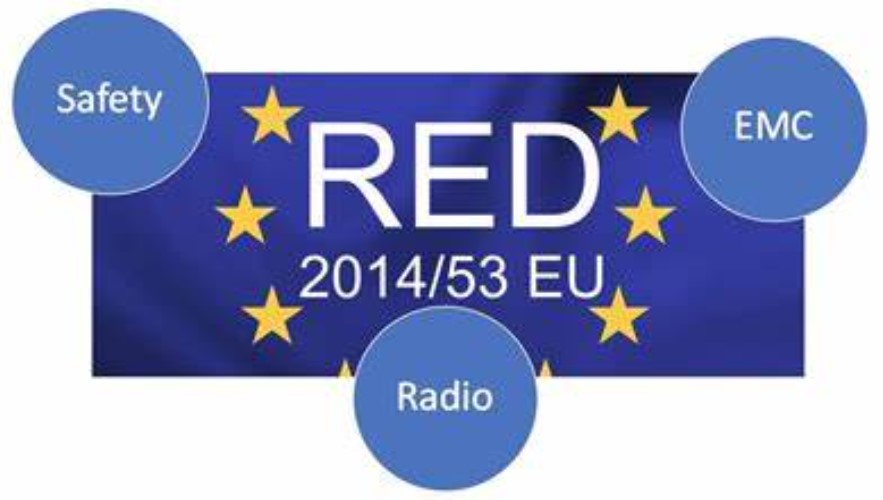
The radio equipment directive 2014/53/EU (RED) establishes a regulatory framework for placing radio equipment on the market. It ensures a single market for radio equipment by setting essential requirements for safety and health, electromagnetic compatibility, and the efficient use of the radio spectrum. It also provides the basis for further regulation governing some additional aspects. These include technical features for the protection of privacy, personal data and against fraud. Furthermore, additional aspects cover interoperability, access to emergency services, and compliance regarding the combination of radio equipment and software.

Update on Articles 3(3)(d), (e) and (f) 

Commission strengthens cybersecurity of radio equipment

The Commission adopted a Delegated Act of the Radio Equipment Directive activating Articles 3(3)(d), (e) and (f) for certain categories of radio equipment to increase the level of cybersecurity, personal data protection and privacy.

Earlier, the Commission authorised a contractor to conduct an impact assessment study on protection in internet-connected radio equipment and wearable radio equipment.
Specifically, it focused on

  • the protection of personal data and privacy
  • the protection from fraud

Different options were considered, in line with the inception impact assessment.
See the final report of the study.

Update on Articles 3(3)(i) and 4

We ask the public and stakeholders to contribute to a data collection exercise. Based on this, we will perform an impact assessment of options that ensure that reconfigurable radio systems approved for Europe’s single market stay compliant with the Radio Equipment Directive after the installation of new or modified software.

The RED aligned the previous directive, the radio and telecommunication terminal equipment directive (1999/5/EC(R&TTED), with the new legislative framework

for the marketing of products.

The revision also took account of the need for improved market surveillance. In particular, for the traceability obligations of manufacturers, importers and distributors. It has improved market surveillance instruments. One example is the possibility for required preregistration of radio equipment in categories with low compliance levels.

The RED was published in the OJEU on 22 May 2014, entered into force on 11 June 2014 and is applicable as of 13 June 2016. It included a one-year transitional period, which ended on 12 June 2017 (Article 48). During the transitional phase, manufacturers were allowed to place on the market radio equipment compliant with either the RED or the EU legislation applicable before 13 June 2016 (e.g. R&TTED).

For more details on the application of the RED, see the RED guide under the guidance section below.