CCC (China Compulsory Certification) is a mandatory product certification system in China for certain consumer products. It is administered by the China Quality Certification Center (CQC) and is aimed at ensuring the safety, health, and environmental protection of consumers.
CCC certification is required for a wide range of products including, but not limited to, electronics, electrical appliances, automotive parts, toys, and telecommunications equipment. It covers both domestic and imported products that are sold or used in China.
To obtain CCC certification, manufacturers or importers must demonstrate that their products meet the specified safety, health, and environmental requirements set by the Chinese government. This involves submitting comprehensive technical documentation, undergoing testing at accredited laboratories, and complying with the applicable standards and regulations.
Once a product receives CCC certification, it is allowed to be sold and used in China. The CCC mark, which consists of a circular logo with the letters “CCC” inside, must be displayed on the product or its packaging to indicate its compliance with the certification requirements.
CCC certification serves as a means to protect consumers from unsafe or environmentally harmful products. It also helps manufacturers and importers ensure the quality and reliability of their products, thereby gaining consumer trust and market acceptance in China.
We provide technical services including CCC certification, factory audits, system establishment, rectification of non-conformances, process optimization, and acceleration for China’s CCC certification. If you have any requirements related to CCC certification in China, please feel free to contact us.
The NMPA (National Medical Products Administration) is the abbreviated name for China’s primary regulator of medical devices and drugs. It oversees the safety and effectiveness of medical devices, drugs, cosmetics, and food, ensuring that these products comply with regulations and standards. The NMPA is also responsible for formulating relevant policies and regulations, and collaborating with regulatory agencies in other countries and regions to promote international recognition and cooperation. In China, medical devices and drugs must undergo registration and approval by the NMPA before they can enter the market, in order to ensure the health and safety of the public.
The National Medical Products Administration (NMPA) in China plays a crucial role in the regulation of medical devices. As the authority responsible for medical device supervision, the NMPA ensures the safety and effectiveness of these products through a series of regulations and processes.
For medical devices to be sold and used in China, they must undergo strict evaluation and review conducted by the NMPA for registration. Obtaining a medical device registration certificate is a necessary requirement for market entry in China.
The NMPA is also responsible for overseeing the production, distribution, and usage of medical devices, monitoring product quality and ensuring safety. Additionally, the NMPA collaborates with regulatory agencies in other countries and regions to promote international recognition and cooperation in the field of medical devices.
In summary, the NMPA plays a pivotal role in ensuring the safety and effectiveness of medical devices, safeguarding the health and safety of the public in China.
We provide NMPA domestic medical device registration, consulting and coaching, EMC rectification, testing cycle acceleration, process optimization and other services. If you have related technical services registered with China NMPA, you can feel free to contact us, we provide localized professional services!
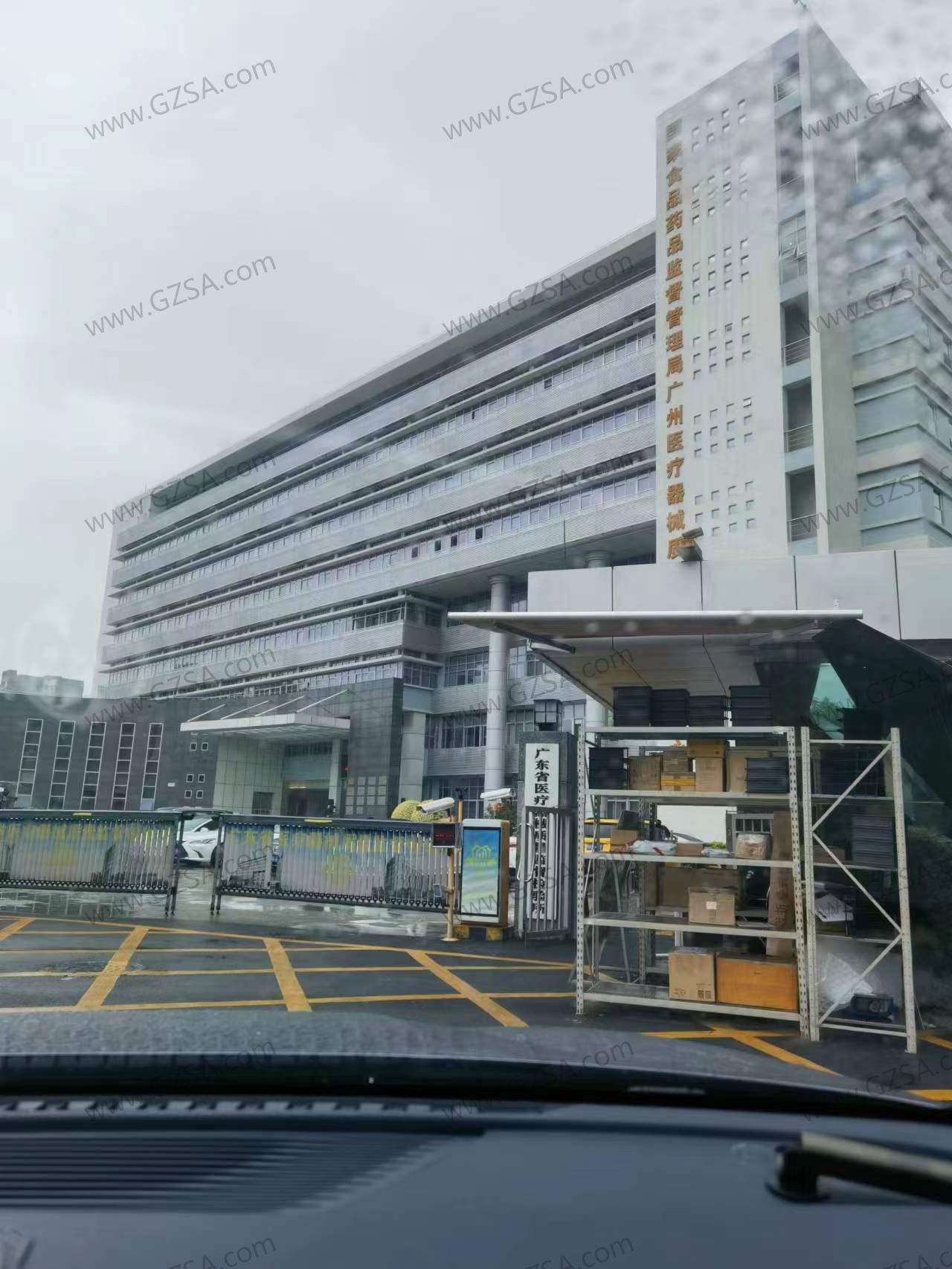
GDMDT – Guang Dong Medical devices quality surveillance and test institute
GZSA is dedicated to providing one-stop technical services for the testing, certification, and rectification of non-compliant issues of China NMPA medical devices. It is based in Guangzhou Science City in Guangdong and is 5 km away from the Guangdong Medical Device Quality Supervision and Inspection Institute. It can provide prompt response to EMC and safety technical services.
EMI – Electro Magnetic Interference – Radiation test
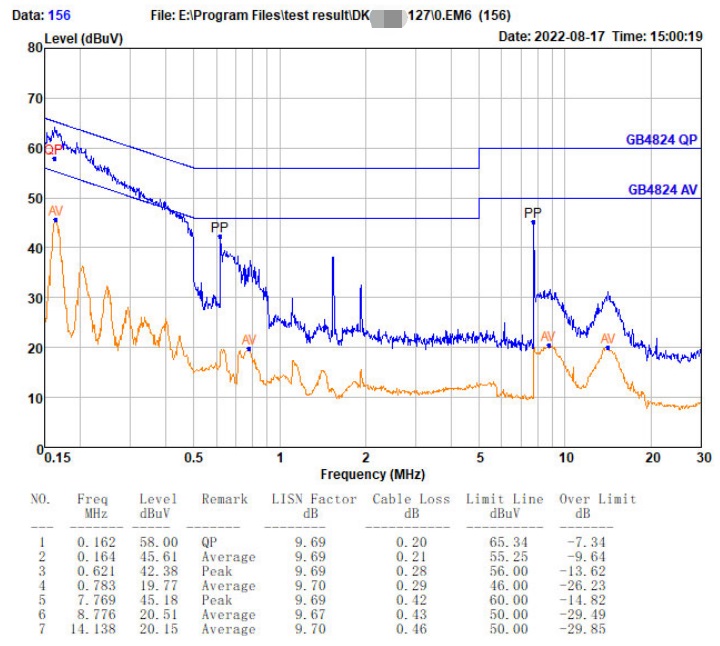
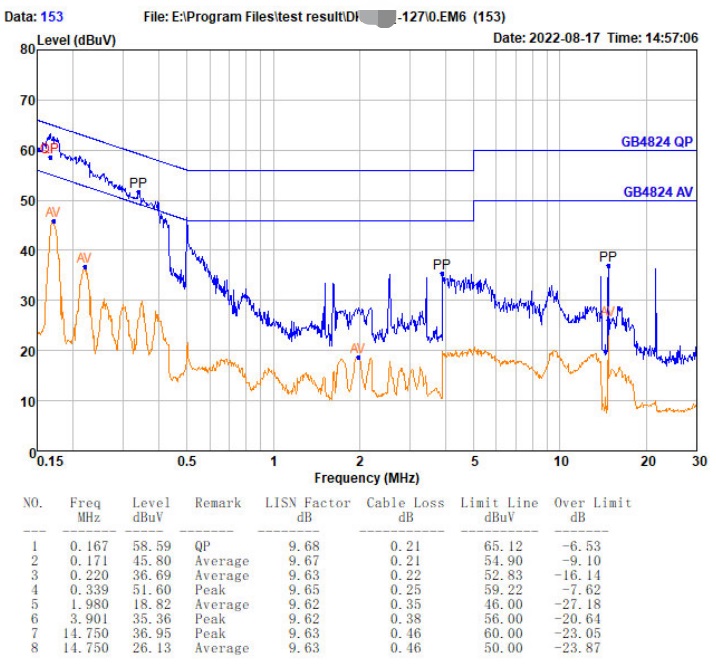
CE Conducted Emissions – GB4824 EN55011 CISPR11
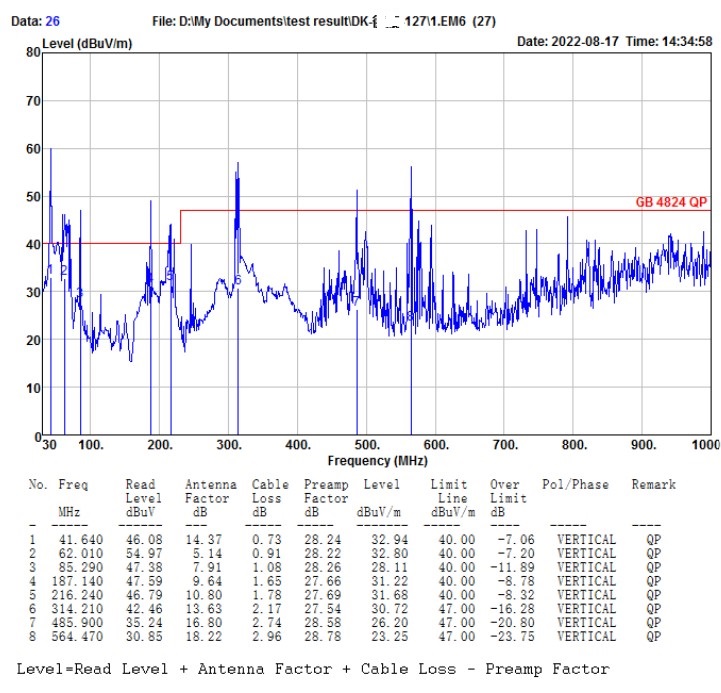
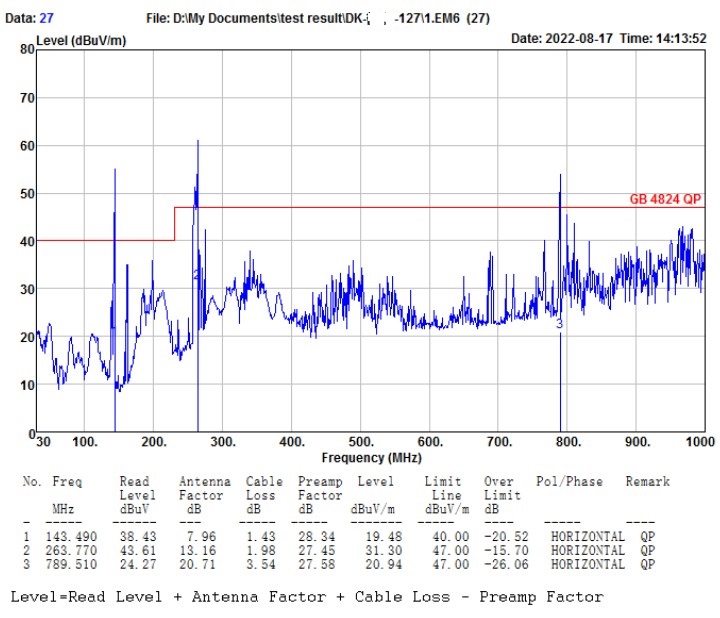
RE Radiation Emission – GB4824 EN55011 CISPR11
Harmonic harmonic current – GB17625.1 EC 61000-3-2
Flicker – Voltage fluctuations and flickering – GB17625,2 1EC 61000-3-3
EMS – Electro Magnetic Susceptibility measurement – Anti-interference measurement
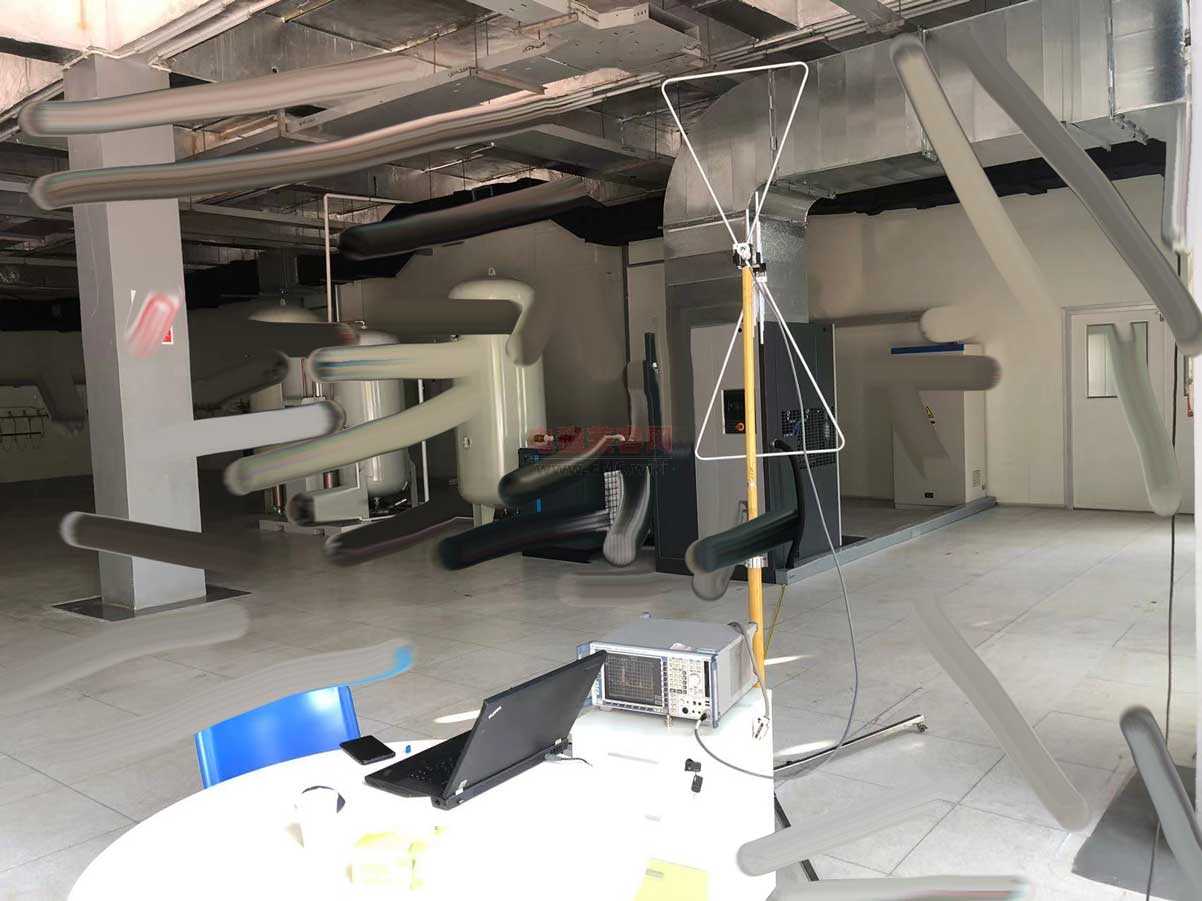
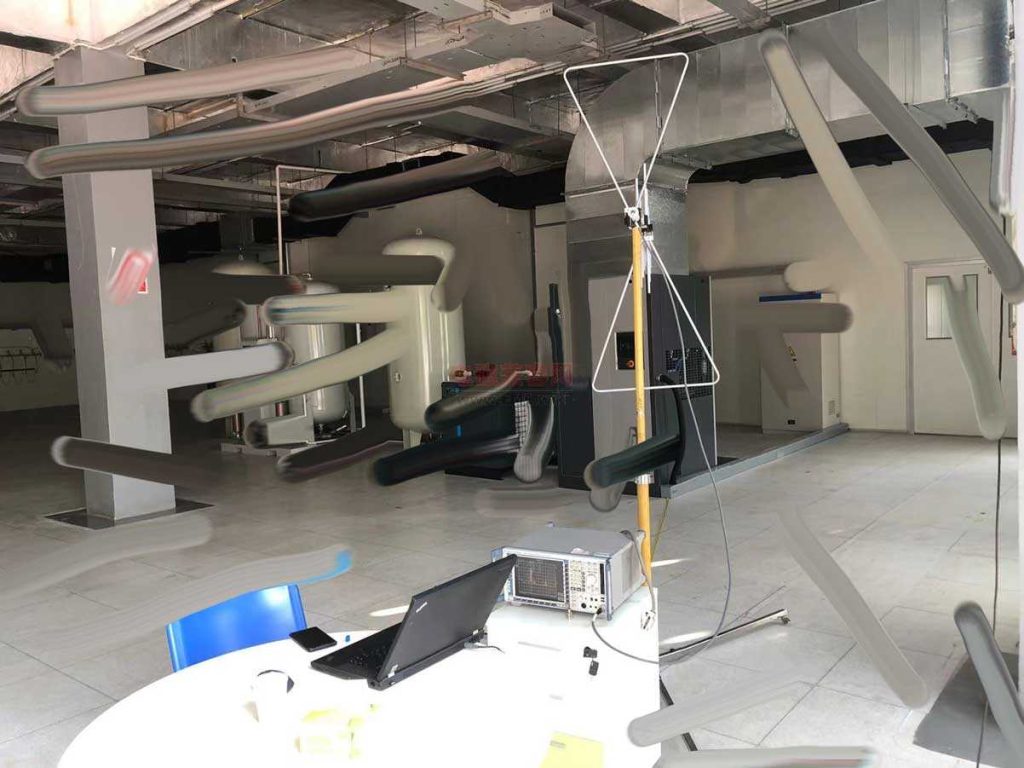
Test Methods of Electromagnetic Compatibility In-situ for Large Medical Equipment or System 【ON-SITE (IN-SITU) EMC TESTING】
Electromagnetic compatibility testing of medical equipment in my country has been mandatory. Large medical equipment or systems often have characteristics such as large size, inconvenient transportation, relatively fixed installation, and large rated power supply current (here specifically refers to each phase current greater than 16 A), such as MRI, DR , cascade biochemical analyzers, high-power sterilizers, hyperbaric oxygen chambers, etc.
This type of equipment is more complex than conventional medical equipment in terms of test layout and cable connections. Due to the special requirements of the installation environment and usage environment, some equipment or systems are often inconvenient to conduct electromagnetic compatibility testing in a laboratory environment, and the equipment needs to be tested and evaluated at the installation site.
Similarly, there are large industrial equipment systems (for example, various large energy storage cabinets, charging stations, heavy industry equipment, large frequency converter cabinets, drying ovens, high-power motors, etc.), etc. due to fixed installation, large size, and inconvenient transportation. , large rated power supply current, and even some require separate other auxiliary support systems, etc., it is often impossible to complete electromagnetic compatibility testing in the laboratory. At this time, EMC on-site testing needs to be performed at the customer’s product site.
GZSA can provide one-stop technical services such as on-site EMC testing, non-conformity EMC debug, standard technical consultation, and registered inspection reports in China and across the country.
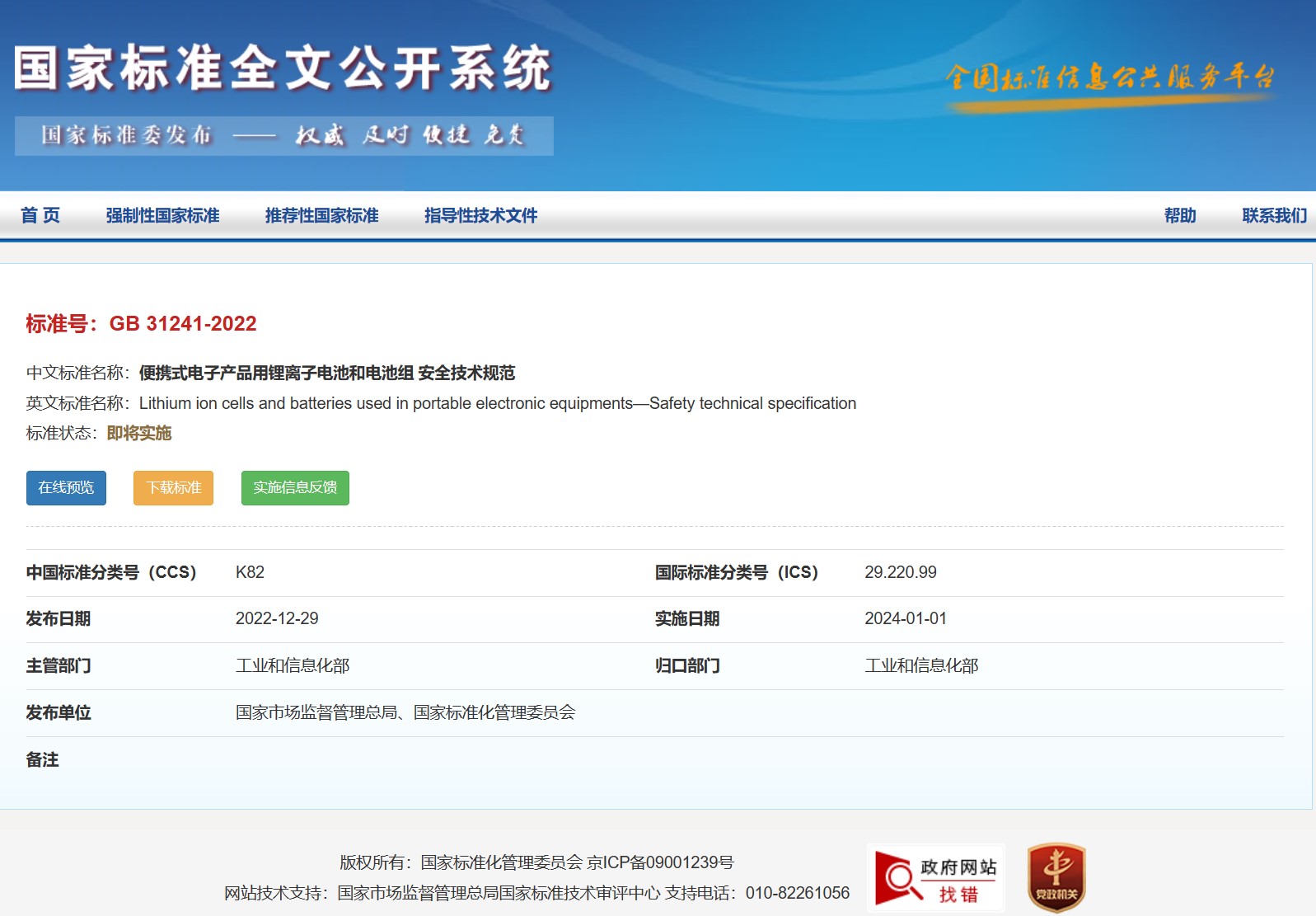
The SAC (Standardization Administration of the People’s Republic) issued an announcement from December 29, 2022 notifying that an updated version of GB StandardGB 31241-2014: Safety Specifications for Lithium-Ion Cells and Batteries for Portable Electronic Devices will be effective from January 1, 2024. The new standard will be GB 31241-2022 and lithium-ion cells and batteries may be covered by CCC certification and battery registration for China.
More information about the changes to the GB 31241-2022 standard will be posted on our website as soon as they are known. It is expected that the new version of the standard will set higher requirements for the safety and reliability of lithium-ion cells and batteries for portable electronic devices to further ensure consumer safety.
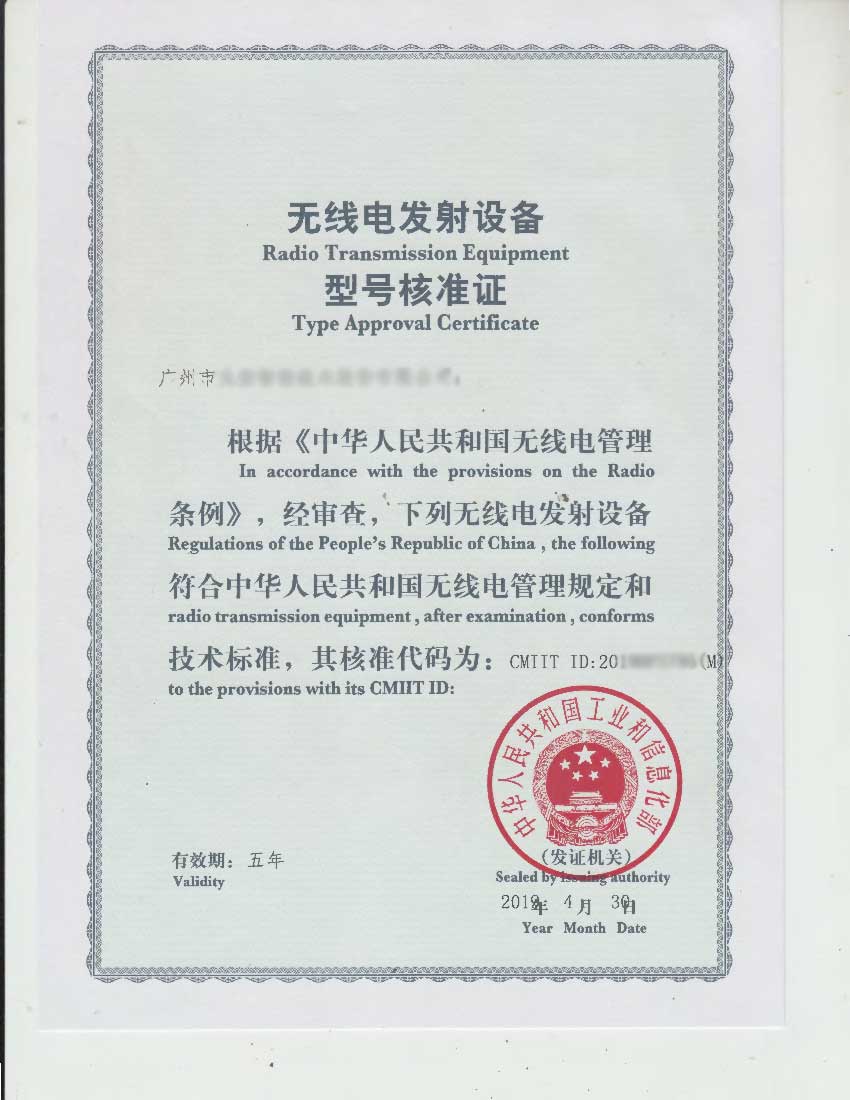
The CCC certificate is a mandatory certification in China that was introduced in 2002. It is similar to the European CE system and regulates that products requiring CCC certification can only be imported, sold, and used in China after they have received CCC certification.
The GB standards are one of the most important groups of standards in China that define the requirements for product conformity according to Chinese requirements. They apply to all products available on the market and are a prerequisite for production facilities to obtain a CCC certificate for their products.
For more information on how battery registration for China, CCC certification, the CCC Self-Declaration and voluntary CCAP or CQC certification may affect your company, or for more information about CCC certification in general, please visit our News Section where you will find current updates twice a week.
Please do not hesitate to contact us for further details and consultation. You can contact us via e-mail, info@gzsa.com Chat, or call us (CN: +86 139 2899 3907,US: +1 980 206 0688).
You can also check out our free CCC-Brochure, which can be downloaded as a PDF file. The brochure also contains information on the CCC Self-Declaration and the voluntary CQC- and CCAP-Certification).
1.If the built-in module without certification, please provide fixed frequency prototype 5 units (lead RF line), fixed frequency tools 5, fixed frequency software and operating instructions.
2.If the built-in module has been certified and meets the requirements of the Ministry of Industry and Information Technology (MIIT) Document No. 1 of 2014, please provide a complete fixed-frequency prototype and the built-in module certificate, one fixed-frequency tool, fixed-frequency software and operating instructions.Please note: Each sample must have a label (nameplate) and a unique identification code (serial number or number).
Data Request
A:Have you registered an account in the “National Integrated Online Government Service Platform” or “Ministry of Industry and Information Technology Government Service Platform”, if not, please provide the following information, we will help you to register
1.Proof of organization and Chinese translation, with signature stamp
2.Scanned copy of legal person’s passport
B:All files need to be in Chinese and the file size should not exceed 5M: (Each model)
1.Application form, commitment letter (Annex)
2.Scanned copy of business license and Chinese translation of the business license
3.Scanned copy and signature of the passport of the manager.
4.If the product is produced by the applicant, provide the applicant’s ISO quality system certificate (the scope of the certificate needs to include the product category of this application), if not need to provide a description of technical capabilities, production capacity and quality assurance system (can refer to the annex).
5.If the applicant commissions the production on behalf of the factory, it is necessary to provide the applicant and the factory’s commissioning contract and the factory’s ISO quality system certificate or system status statement.
6.Whole machine schematic diagram, block diagram, product manual, product technical manual, RF part BOM (fill in the attachment), RF module/chip specification, antenna specification, antenna gain and line loss description (see attachment), product six-sided photo + internal photo (attachment).
Mr Zeng specializes in the field of electromagnetic compatibility, providing customers with professional EMC testing, safety testing, withstand voltage testing, leakage current testing, grounding resistance testing, high and low temperature testing, reliability testing, and various certifications, providing one-stop service , more can contact Mr Zeng 139 2899 3907 (same number on WeChat).
Contact Mr Zeng for EMC debug of medical surgical robot
In the medical device industry, surgical robots usually belong to the third category of medical treatment. The National Medical Products Administration (abbreviated as NMPA) usually carefully reviews such devices. Therefore, we need to take seriously the technical data, product specifications, document specifications and corresponding test reports. Among them, it is believed that many of these surgical robot enterprises will face some technical difficulties, for example, the core components such as mechanical arms and consoles are purchased from foreign countries or other suppliers. These foreign manufacturers or domestic suppliers will not provide more information or better cooperation. In particular, when the surgical robot fails to pass the electromagnetic compatibility test, safety regulation test, withstand voltage test, leakage current test and grounding resistance test, it will be helpless. It makes enterprises face great difficulties in the process of registration to listing, and brings great frustration to corresponding enterprises, registered engineers, and even some professional teachers responsible for registration.
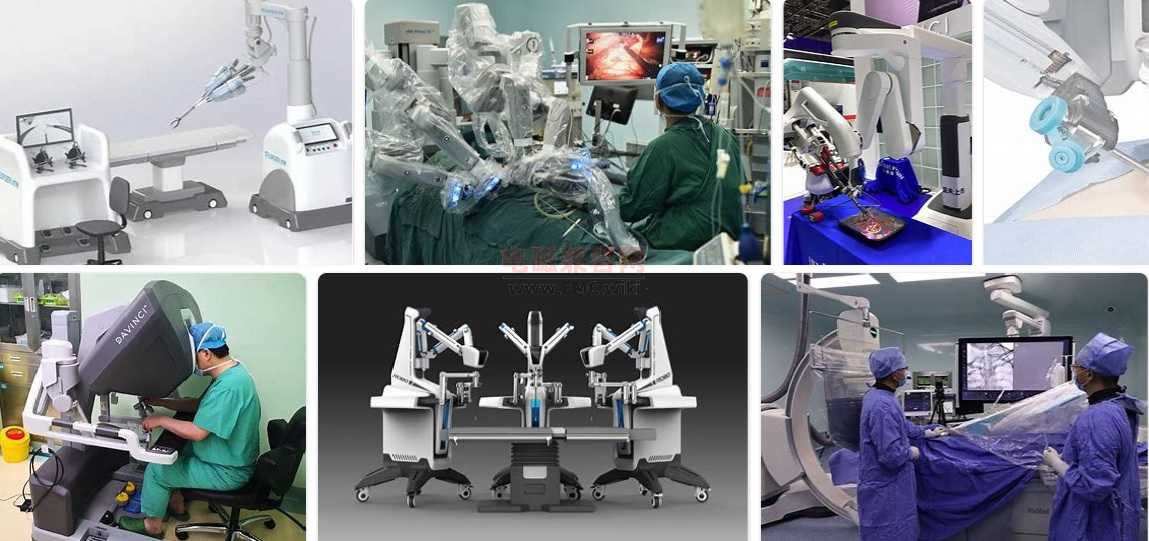
Surgical robot
The biggest problem encountered by surgical robots in the process of medical device registration, the determination of corresponding technical parameters, and clinical trials. Then, it is the safety test of the corresponding EMC electromagnetic compatibility and safety regulations. These two pieces need very professional engineers with relevant industry experience and corresponding laboratories, so as to effectively predict the EMC problems and safety problems of surgical robots in advance. Even when the project is put on file and the project is reviewed, the safety regulations and electromagnetic compatibility should be evaluated in advance. Instead, it is risky to buy all the parts and key parts, and then do the test in reverse.
Common classification of medical surgical robots
Medical robots refer to the robots used for medical treatment or auxiliary medical treatment in hospitals and clinics; It is a kind of intelligent service robot, which can independently prepare operation plans, determine action programs according to the actual situation, and then turn the action into the motion of the operating mechanism.
According to different purposes, medical robots can be divided into hospital distribution robots, mobile patient robots, clinical medical robots, rehabilitation robots, nursing robots, medical teaching robots, etc.
Clinical medical robot
Clinical medical robots include surgical robots, diagnosis and treatment robots, which can perform precise surgical operations or diagnosis, such as Japan’s WAPRU-4 chest tumor diagnosis robot; The American surgical robot “Da Vinci system” is the top priority of medical robots.
The first robot assisted surgery was performed in 1985. At that time, industrial robots were used to stabilize the patient’s head, so as to facilitate neurosurgery drilling and inserting tissue sampling needles into designated positions.
The “Da Vinci” robot is the most famous in the industry, and its success is partly due to its FDA approval for clinical use; The domestic Tianzhihang Company has also obtained the registration license of surgical robot medical devices issued by the National Medical Products Administration (abbreviated as NMPA, Formerly called CFDA) , becoming the only orthopedic robot system capable of carrying out traumatic orthopedic and spinal surgery in the world.
Ophthalmic surgery robot
Orthopedic surgical robot
Dental assistant robot
Gastroscope robot
Common components of medical surgical robots
It mainly consists of a console and an operating arm. The console consists of a computer system, a surgical operation monitor, a robot control monitor, an operating handle, an input/output device, etc. During the operation, the surgeon can sit in front of the console far away from the operating table, lean his head on the field frame, receive complete images from different cameras with both eyes, and jointly synthesize the three-dimensional stereogram of the surgical field. The doctor controls the operating lever with both hands, and the hand movement is transmitted to the tip of the mechanical arm to complete the surgical operation, thus increasing the accuracy and stability of the operation. This is a new master slave remote operation mode.
Generally, surgical robots are composed of the following major technical systems
Surgical navigation and positioning technology (infrared optical positioning and other technologies)
Surgical robot structure and mechanical arm
Image processing system of surgical robot
Difficulties in EMC debug(rectification) of surgical robot
Surgical robot enterprises will face some technical difficulties. For example, core components such as mechanical arms and consoles are purchased from foreign countries or other suppliers. In this way, it will be very difficult to test and rectify your own compliance and compliance with the corresponding standards.
The mechanical arm and other moving parts of the surgical robot use all kinds of stepping motors, which are usually driven by pulses. In this way, the voltage and current change rate of dv/dt and di/dt is very large, and the same interference is very large, which brings challenges to EMC design and rectification.
The console of the surgical robot usually includes high-speed DSP, CPU and other processors. Because of the need for high-speed and high-precision computing and positioning, high frequency image processing, high-speed transmission of gigabit networks, 5G networks, and the need to display real-time images of the surgical scene through high-speed displays, it will involve a lot of digital interference of high-speed data processing chips.
Console, mechanical arm, navigation and monitoring of surgical robot often need physical cable connection to form a complete system, so that all kinds of cables will form a very large equivalent transmission antenna, making it easier to transmit interference through these cables. Therefore, these cables need special treatment.
Similarly, because of the existence of positioning and navigation, some use various laser, ultrasonic and other technology radar and other positioning technologies. These signals and their echoes, their PCB circuits often bring very big interference, and these intentionally emitted interference is relatively difficult to deal with.
Finally, a more important thing is the power supply system. Some of them also come with UPS, which should meet the medical standard requirements of IEC 60601-1 IEC 60601-1-2, including the design margin requirements. This type selection is very important.
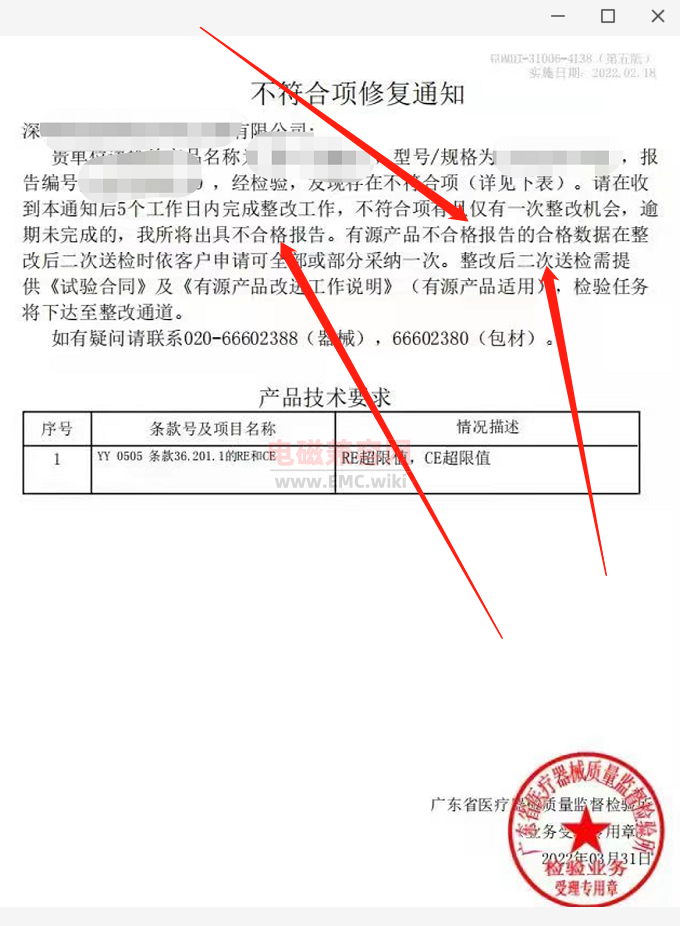
YY 0505 – 2012 – YY 9706.102 GB 4824 Radiation Test – V
YY 0505 – 2012 – YY 9706.102 GB 4824 Radiation Test – H
YY 0505 – 2012 – YY 9706.102 GB 4824 Conduction Test – L
YY 0505 – 2012 – YY 9706.102 GB 4824 Conduction Test – N
Who can the surgical robot find to EMC debug(rectify), and what are its advantages?
EMC testing of medical devices
We have experience in EMC design and rectification of surgical robots at home and abroad, including successful inspection, testing and reporting in the National Medical Device Testing Institute, which can provide customers with more mature experience.
With a professional CNAS national recognized laboratory, it can provide customers with accurate test data and reliable precautions in the inspection process, reduce the uncertainty of test data, and improve the confidence of the national laboratory for final inspection.
We have a professional technical team. We are not alone in technical research, but a team with more than 10 years of experience. Before the release of YY 0505 – 2012 in China, we were engaged in the safety regulation and electromagnetic compatibility testing, rectification and design of European medical devices in EN/IEC 60601-1 – 2.
The team with professional service quality can provide enterprises with accelerated and urgent processing, and can cooperate with overtime processing. The laboratory is located near the National Inspection Institute, which can facilitate data comparison, confirm the data of the national laboratory, and ensure the consistency of the predicted rectification data, so that the national inspection center can better pass at once.
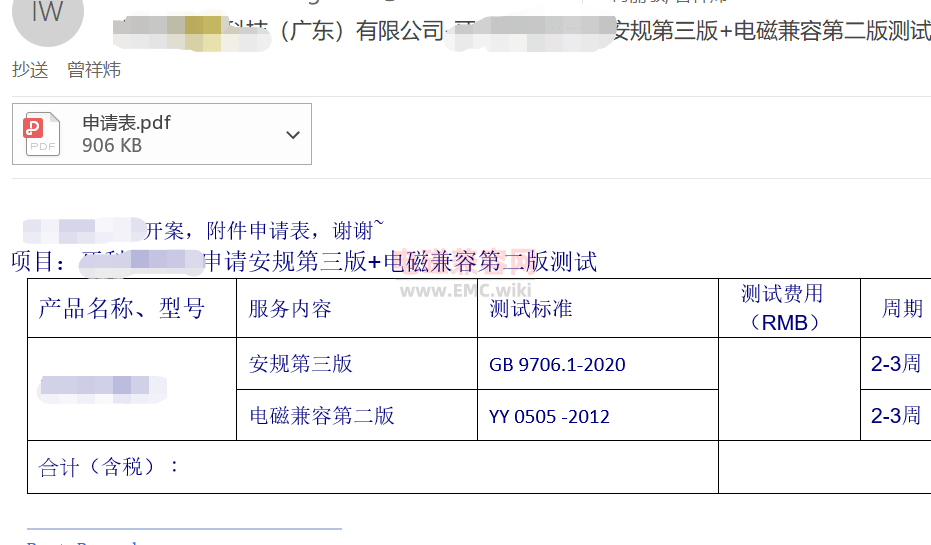
It can provide YY 9706-102-2021 YY 0505 – 2012 GB 9706.1-2020 and other standard analysis, standard answers and standard training, which can enable enterprises to better understand standards and product compliance.
We not only provide inspection, rectification and design to the certification stage, but also help enterprises to introduce production and normalize the mass production of products, so that we can truly absorb the experience in the registration and inspection process, so as to minimize the risk of national medical flight inspection.
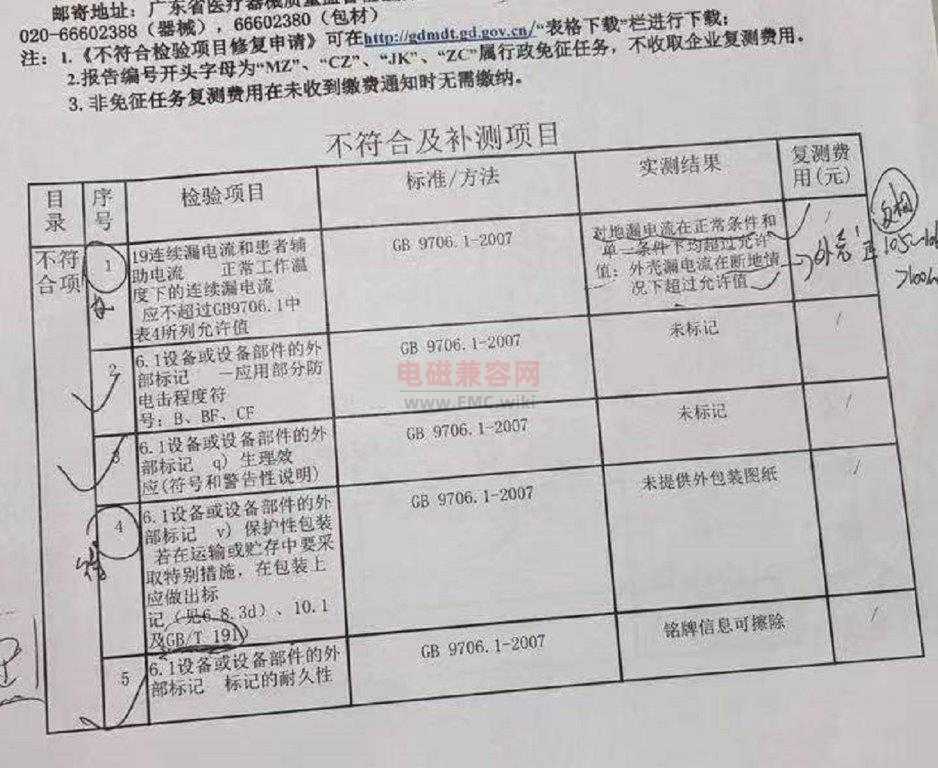
Provide emc test, EMC debug, safety leakage current test, safety withstand voltage test, safety grounding resistance test of medical device products, provide full project forecast service of medical device products, commissioned inspection report service, CNAS report, CMA report, high Low temperature, reliability test, data discrepancy investigation between medical device product laboratories, product EMC and safety regulation instability investigation. Provide EMC electromagnetic compatibility YY 0505-2012 / YY 9706.102-2021 standard training services, provide SAFETY safety regulations GB 9706.1-2007 / GB 9706.1-2020 standard training services, provide on-site training, on-site rectification services.
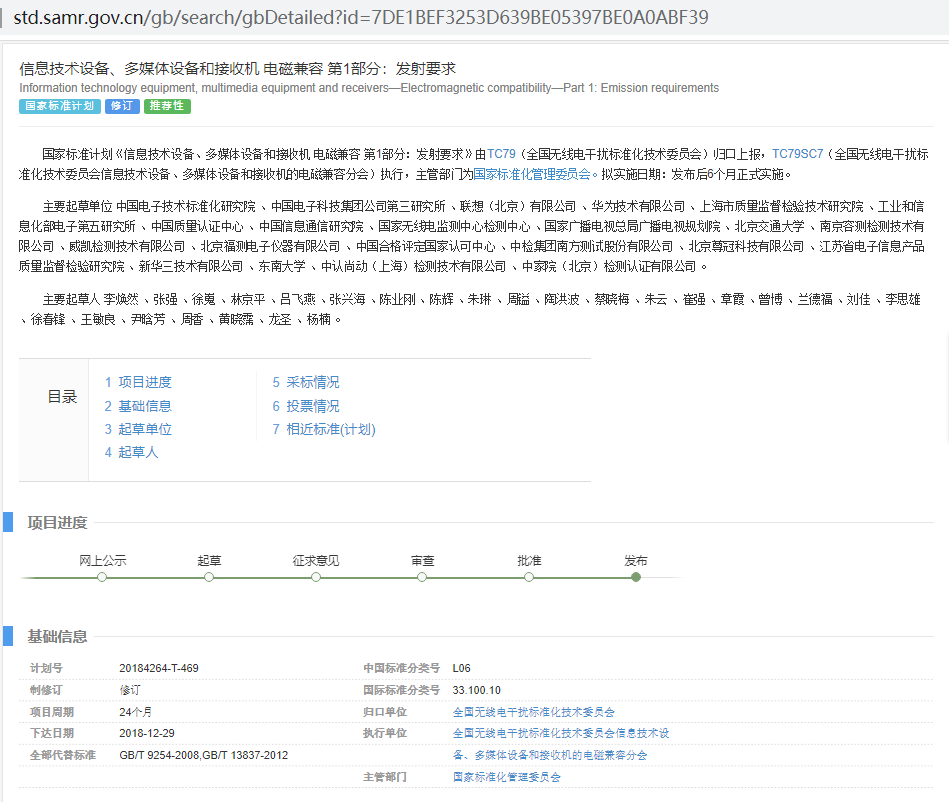
信息技术设备、多媒体设备和接收机 电磁兼容 第1部分:发射要求 Information technology equipment, multimedia equipment and receivers—Electromagnetic compatibility—Part 1: Emission requirements
The National Standards Plan “Electromagnetic Compatibility of Information Technology Equipment, Multimedia Equipment and Receivers Part 1: Transmission Requirements” is reported under the jurisdiction of TC79 (National Radio Interference Standardization Technical Committee), TC79SC7 (National Radio Interference Standardization Technical Committee Information Technology Equipment, Multimedia Equipment and The electromagnetic compatibility branch of the receiver) is implemented, and the competent authority is the National Standardization Management Committee.
Standard number GB/T 9254.1-2021 Release date 2021-12-31 Implementation date 2022-07-01 The project period is 24 months, and the conversion period is 2 years.(Mandatory time:2024-07-01) Replace all standards GB/T 9254-2008, GB/T 13837-2012
Standard adoption
The revision of this standard adopts the IEC international standard: CISPR 32:2015. Adopting standard Chinese name: EMC emission requirements for multimedia equipment.
You are welcome to consult us, please contact David Zeng info@emc.wiki or 1513888718@qq.com , We can provide one-stop testing, EMC debug and certification services.
The full name of 3C certification is “China Compulsory Product Certification”. It is a product conformity assessment system implemented by the Chinese government to protect consumers’ personal safety and national security, strengthen product quality management, and implement in accordance with laws and regulations. The so-called 3C certification is China’s compulsory product certification system, the English name is China Compulsory Certification, and the English abbreviation is CCC.
In December 2001, the General Administration of Quality Supervision, Inspection and Quarantine issued the “Management Regulations on Compulsory Product Certification”, which replaced the original imported product safety and quality licensing system and electrical product safety certification system with a compulsory product certification system. China Compulsory Product Certification is referred to as CCC certification or 3C certification. It is a statutory compulsory safety certification system, and it is also a basic practice widely adopted internationally to protect consumers’ rights and interests and safeguard consumers’ personal and property safety.
The products listed in the “Product Catalog for Compulsory Product Certification”, including household appliances, automobiles, safety glass, wires and cables, toys and other products, require CCC compulsory certification. The products in the catalog are subject to changes at any time due to policies. For details, please consult David Zeng info@emc.wiki or 1513888718@qq.com .
CCC Certification Process
Provide information, online application, certification application and acceptance
Send sample test, issue type test report, product type test
Factory inspection, and then issue CCC certificate (there is still a certificate that can be issued first, av it (a cqc certification), you can issue the certificate first, and then audit the factory, the certificate must be completed within 3 months)
Evaluation and approval of certification results
Supervision after certification
CCC regular confirmation inspection
Safety regulations once a year, electromagnetic compatibility, once every 2 years
CCC certificate validity period
Valid for 5 years, can be renewed, each certificate must be reviewed annually
CCC annual review notes
More than 3,000 annual audits, a certificate
Hospitality expenses for meals, plus red envelopes, estimated to be 6000 yuan
For example, Guangzhou changed to Foshan, the applicant and the manufacturer wrote Panyu, and the factory wrote Foshan, and issued a new certificate. Where is the factory written on the certificate, it will be audited
If the factory crosses the city, the certificate number must be changed. If the factory is moved in the city, there is no need to change the certificate information. The certificate is valid for 5 years, renewal is very cheap.
Generally at least 30 units are audited, and at least 5 units can be certified samples.
Pure assembly, no environmental assessment is required.
Withstand voltage, grounding test equipment, multimeter, caliper, micrometer.
Withstand voltage: the first type of product national standard 1500v 60 seconds, the second type of 3500v 60 seconds
Work instructions are made for each station, and if assembled, a supply contract is provided.
CCC certificate query
http://cx.cnca.cn/CertECloud/index/index/page
You are welcome to consult us, please contact David Zeng info@emc.wiki or 1513888718@qq.com , We can provide one-stop testing, EMI debug and certification services.