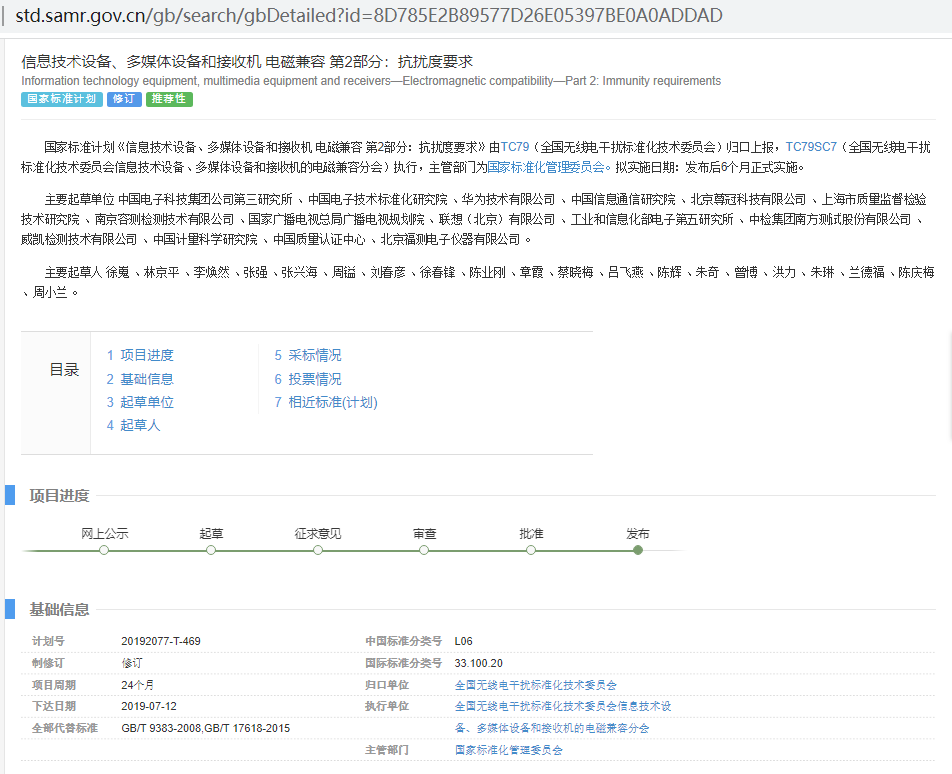
China Releases a National Standard -GB/T 9254.2-2021

信息技术设备、多媒体设备和接收机 电磁兼容 第2部分:抗扰度要求
Information technology equipment, multimedia equipment and receivers—Electromagnetic compatibility—Part 2: Immunity requirements

The national standard plan “Electromagnetic Compatibility of Information Technology Equipment, Multimedia Equipment and Receivers Part 2: Immunity Requirements” is reported under the jurisdiction of TC79 (National Radio Interference Standardization Technical Committee), TC79SC7 (National Radio Interference Standardization Technical Committee Information Technology Equipment, Multimedia Equipment and Receiver Electromagnetic Compatibility Branch), the competent authority is the National Standardization Management Committee. Proposed implementation date: officially implemented 6 months after the release.

Standard number: GB/T 9254.2-2021
Release Date: 2019-07-12
Project cycle: 24 months, 2-year conversion cycle
Replace all standards: GB/T 9383-2008, GB/T 17618-2015

Standard adoption

The revision of this standard adopts the IEC international standard: CISPR 35:2016.
Adopting standard Chinese name: electromagnetic compatibility and immunity requirements for multimedia equipment.

2022-01-06 Chinese National Standard Announcement

You are welcome to consult us, please contact David Zeng info@emc.wiki or 1513888718@qq.com , We can provide one-stop testing, EMC debug and certification services.

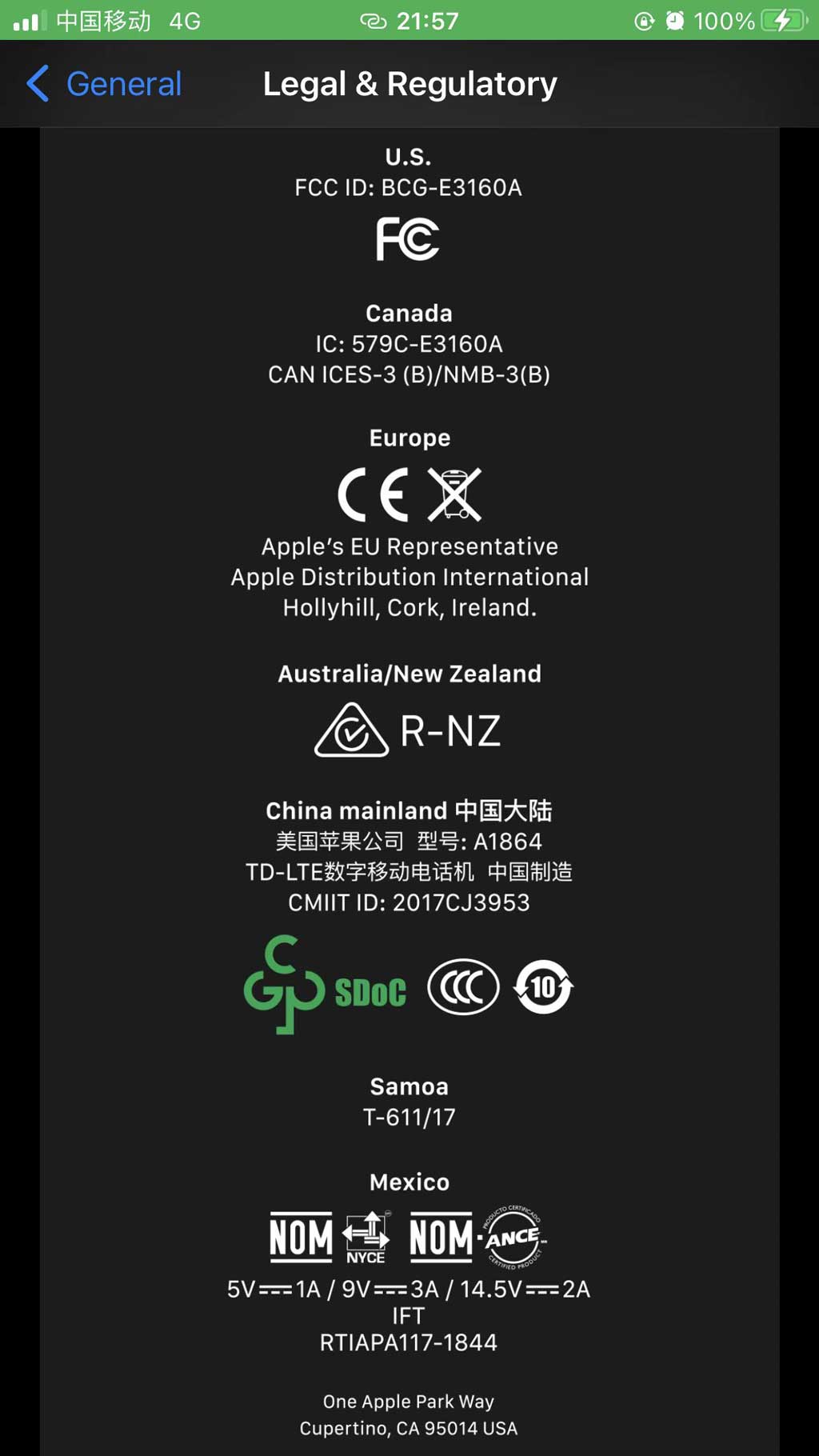
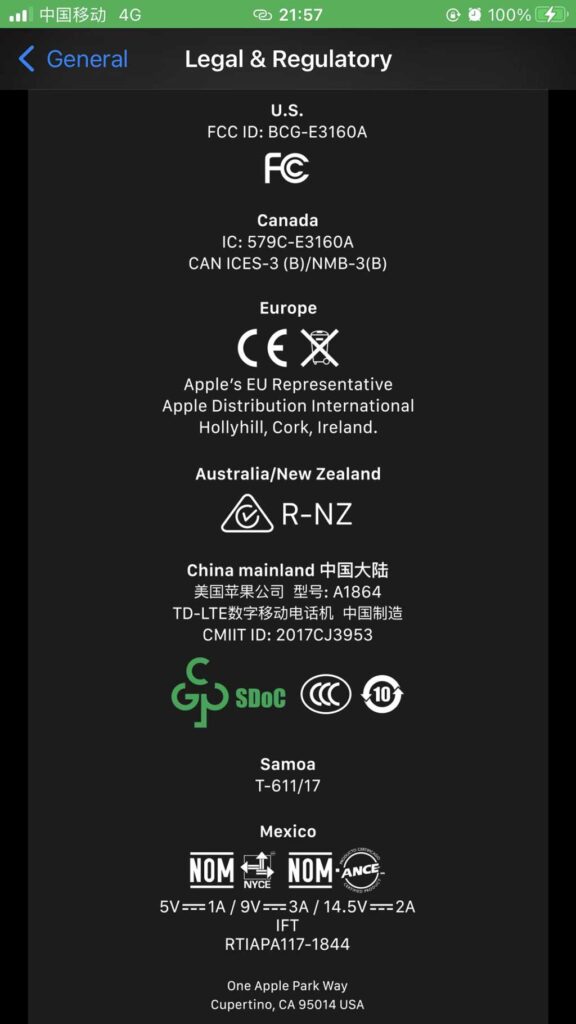
iphone 8 plus – Trademark nameplate learning certification knowledge

As can be seen from the built-in electronic tag of iphone8, it has FCC certification (FCC ID&FCC SDOC), Canadian certification (IC ID&IC), CE certification, Australia certification, New Zealand certification, CCC certification, Mexico certification, samoa certification, etc.

You are welcome to consult us, please contact David Zeng info@emc.wiki or 1513888718@qq.com , We can provide one-stop testing, EMC debug and certification services.

FCC ID Search

How to confirm whether FCC ID certification has been done in FCC certification?

  • You can check the FRN number and Grantee Code number. If there is, then you may have done FCC ID certification.
  • Query through the complete FCC ID number = Grantee Code number + product code

Query the company’s FRN number

Applicant’s FCC Registration Number (FRN), which is an identification number given to the enterprise by the government. It can be applied for free on the FCC official website. After application, the website will automatically generate it to the enterprise.

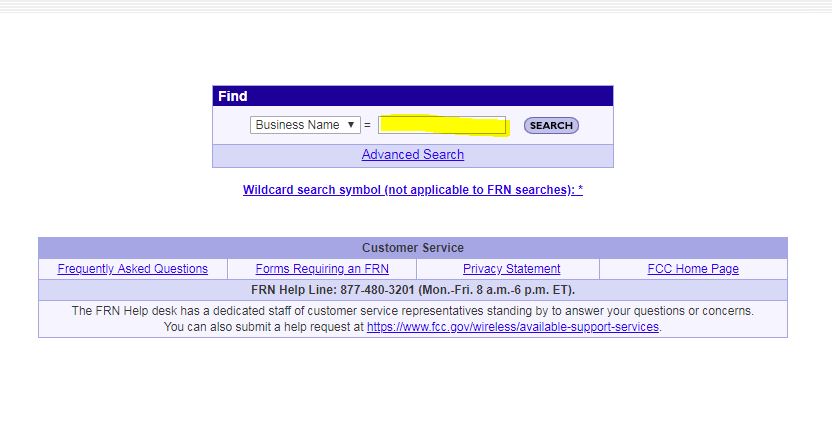
Open the website https://apps.fcc.gov/coresWeb/simpleSearch.do and enter the full name of the company in the yellow box in the picture below.

If you can’t find the FRN number here, then this company must not have done FCC ID certification. At least this company name is here. If didn’t search even your company name on the FCC website, then you must have not successfully applied for FCC ID.

For example, take Fotorama (Hong Kong) Limited as an example to make a query. As shown in the figure below, this company has been registered on the FCC official website on 06/10/2011, then this company is likely to have FCC certification, but it cannot Sure, after completing this step, it is not certain that the customer has actually done FCC ID certification, and then proceed to the next step.

Query the company’s Grantee Code number (authorization code)

For customers who apply for an FCC ID for the first time, they can apply for Grantee Code after applying for an FRN number (a fee of about tens of dollars is required, and the details are subject to the FCC official), and they only need to apply once. Grantee Code (3 or 5 letters or numbers). Each Grantee Code only represents a company. The 3 or 5 digit number is randomly provided by the FCC and is not determined by the customer.

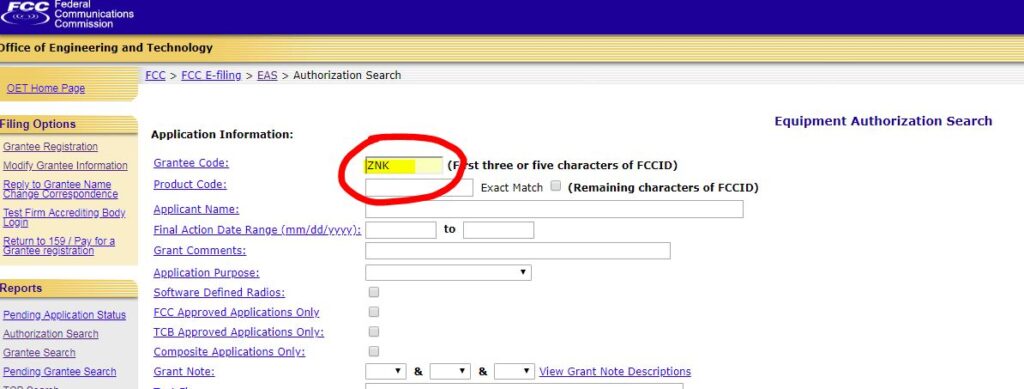
Open the page on the website https://apps.fcc.gov/oetcf/eas/reports/GenericSearch.cfm and enter the first 3 digits or the first 5 letters or horizontal bar code of the FCC ID number. For example, take Fotorama (Hong Kong) Limited as an example for query. As shown in the figure below, the manufacturer’s Grantee Code is ZNK.

Check the FCC ID certification that the company has done before

Query by Grantee Code number

For example, in Grantee Code: query, the premise is that the client’s Grantee Code number (the first 3 digits or the first 5 digits of the FCC ID) is ZNK, then the last step is to query. Open the website https://apps.fcc.gov/oetcf/eas/reports/GenericSearch.cfm page, enter ZNK in the red box, and then click Start Search at the bottom of the page.

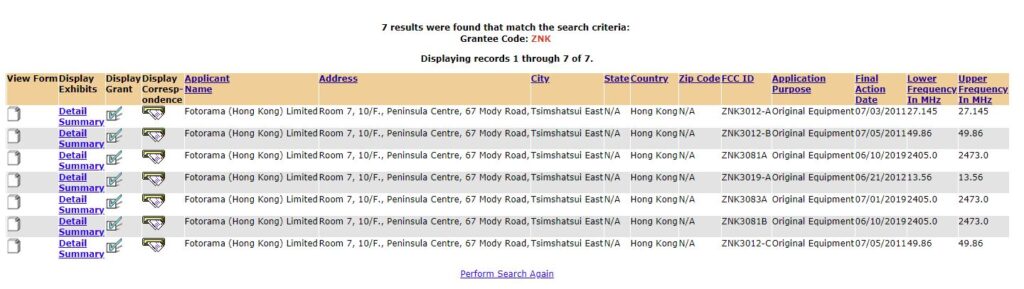
Then the search shows that the customer has made 7 reports. Three products were FCC ID certified in 2011, two products were FCC ID certified in 2012, and three product certifications were made on 06/10 and 07/01 respectively in 2019. The details are shown in the figure below.

Search by company name

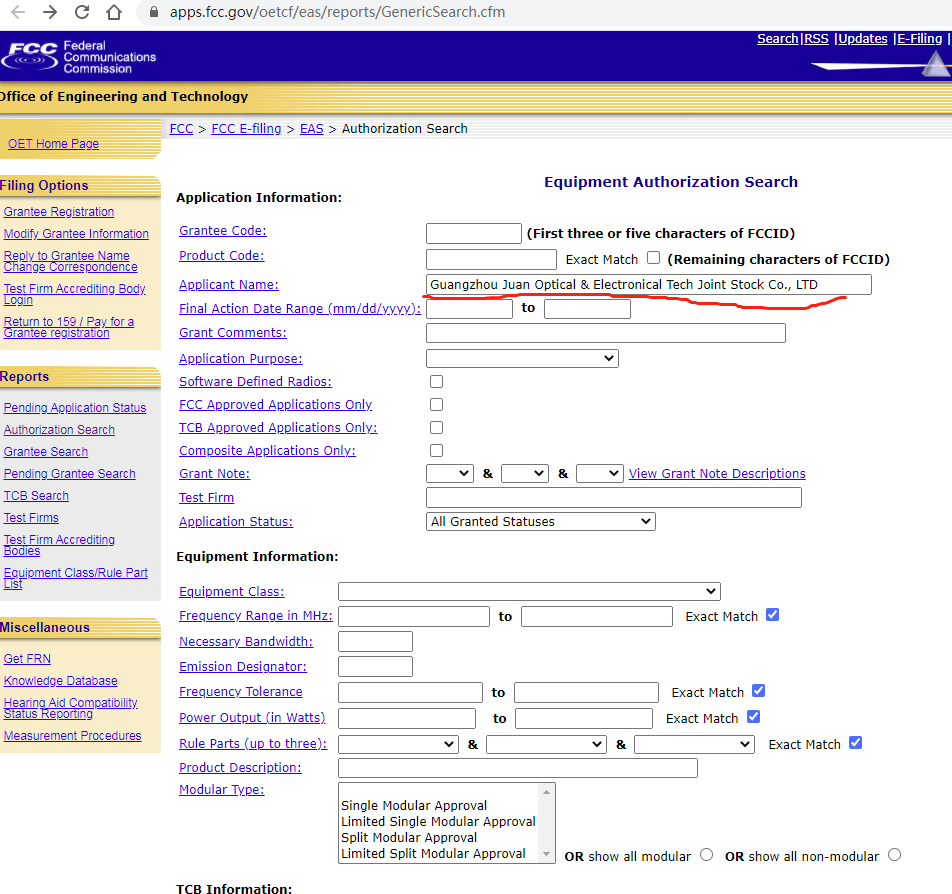
For example, open the website https://apps.fcc.gov/oetcf/eas/reports/GenericSearch.cfm, enter Guangzhou Juan Optical & Electronic Tech Joint Stock Co., LTD in Applicant Name: and click Start Search at the bottom of the page.

FCC ID rules

The FCC ID includes the Grantee Code company code (3 or 5 letters or numbers), and each Grantee Code only represents one company. The 3-digit or 5-digit number is randomly provided by the FCC and is not determined by the customer. Once the application is successful, it will become a fixed number, as the first 3 or 5 digits of the company’s application for FCC ID numbers. And the product code (10-12 letters or numbers) of the product. Therefore, the product ID number, the first three or five digits are Grantee Code, and the latter is self-edited by the applicant (up to 10-12 digits). Usually the product model is used for self-encoding. The complete FCC ID cannot be more than 15 at most. Of course, It can be less than 15.

  • The three-character Grantee Code always starts with an alphabetic character and does not contain the numbers 1 and/or 0.
  • The five-character Grantee Code always starts with a numeric character and does not contain the number 1 and/or 0.
  • The product code may include a hyphen (-).
  • The maximum number of digits of FCC ID cannot be greater than 15 digits.

You are welcome to consult us, please contact David Zeng info@emc.wiki or 1513888718@qq.com , We can provide one-stop testing, EMC debug and certification services.

IEC lighting standards

IEC灯具标准(IEC luminaires standards)

编号 中文名称 英文名称

IEC 60092-306-1980 船舶电气设施 第306部分:设备 灯具和附件 Electrical installations in ships. Part 306 : Equipment – Luminaires and accessories

IEC 60570-2003 灯具用电源导轨装置 Electrical supply track systems for luminaires

IEC 60598-1 AMD 1-2006 灯具.第1部分:一般要求和试验.热塑灯具的热物性试验.修改件1 Luminaires – Part 1: General requirements and tests – Thermal test for thermoplastic luminaires – Amendment 1

IEC 60598-1 Edition 6.1-2006 灯具.第1部分:一般要求和试验 Luminaires – Part 1: General requirements and tests

IEC 60598-1 Interpretation Sheet 1-2004 灯具.第1部分:一般要求和试验 Luminaires – Part 1: General requirements and tests

IEC 60598-1-2003 灯具.第1部分:一般要求和试验 Luminaires – Part 1: General requirements and tests

IEC 60598-2-1 AMD 1-1987 灯具 第2部分:特殊要求 第1节:固定式通用灯具 修改1 Luminaires. Part 2 : Particular requirements. Fixed general purpose luminaires

IEC 60598-2-1-1979 灯具 第2部分:特殊要求 第1节:固定式通用灯具 Luminaires. Part 2 : Particular requirements. Fixed general purpose luminaires*Requirement

IEC 60598-2-10-2003 灯具.第2-10部分:特殊要求.便携式儿童用灯具 Luminaires – Part 2-10: Particular requirements; Portable luminaires for children

IEC 60598-2-11-2005 灯具.第2-11部分:特殊要求.鱼缸用灯具 Luminaires – Part 2-11: Particular requirements – Aquarium luminaires

IEC 60598-2-12-2006 灯具.第2-12部分:特殊要求.安装干线插座的通夜照明灯 Luminaires – Part 2-12: Particular requirements – Mains socket-outlet mounted nightlights

IEC 60598-2-13-2006 灯具.第2-13部分:特殊要求.落地凹槽式灯具 Luminaires – Part 2-13: Particular requirements – Ground recessed luminaires

IEC 60598-2-17 AMD 2-1990 灯具 第2部分:特殊要求 第17节:舞台照明、电视、电影和摄影场所(室内外)用灯具 修改2 Luminaires; part 2: particular requirements; section seventeen: luminaires for stage lighting, television, film and photographic studios (outdoor and indoor); amendment 2 to IEC 60598-2-17:1984

IEC 60598-2-17-1984 灯具 第2部分:特殊要求 第17节:舞台照明、电视、电影和摄影场所(室内外)用灯具 Luminaires. Part 2 : Particular requirements. Section seventeen – Luminaires for stage lighting, television and film studios (outdoor and indoor)

IEC 60598-2-18-1993 灯具 第2部分:特殊要求 第18节:游泳池和类似场所用灯具 Luminaires; part 2: particular requirements; section 18: luminaires for swimming pools and similar applications

IEC 60598-2-19 AMD 1-1987 灯具 第2部分:特殊要求 第19节:通风式灯具(安全要求) 修改1 Luminaires. Part 2 : Particular requirements. Air-handling luminaires. Safety requirements

IEC 60598-2-19 AMD 2-1997 灯具 第2部分:特殊要求 第19节:通风式灯具(安全要求) 修改2 Luminaires – Part 2: Particular requirements – Section 19: Air-handling luminaires (safety requirements); Amendment 2

IEC 60598-2-19-1981 灯具 第2部分:特殊要求 第19节:通风式灯具(安全要求) Luminaires. Part 2 : Particular requirements. Air-handling luminaires. Safety requirements

IEC 60598-2-2 AMD 1-1997 灯具.第2部分:特殊要求.第2节:凹槽式灯具.修改件1 Luminaires – Part 2: Particular requirements – Section 2: Recessed luminaires; Amendment 1

IEC 60598-2-2 Edition 2.1-1997 灯具.第2部分:特殊要求.第2节:凹槽式灯具 Luminaires – Part 2: Particular requirements – Section 2: Recessed luminaires

IEC 60598-2-2-1997 灯具 第2部分:特殊要求 第2节:嵌入式灯具 Luminaires – Part 2: Particular requirements – Section 2: Recessed luminaires

IEC 60598-2-20 AMD 1-1998 灯具.第2部分:特殊要求.第20节:照明器用链.第1次修订 Luminaires – Part 2: Particular requirements – Section 20: Lighting chains; Amendment 1

IEC 60598-2-20 AMD 2-2002 灯具.第2-20部分:灯串.修改件2 Luminaires – Part 2-20: Lighting chains; Amendment 2

IEC 60598-2-20 Edition 2.1-1998 灯具.第2-20部分:特殊要求.照明线 Luminaires – Part 2-20: Particular requirements – Lighting chains

IEC 60598-2-20 Edition 2.2-2002 灯具.第2-20部分:照明器用链的特殊要求 Luminaires – Part 2-20: Particular requirements; Lighting chains

IEC 60598-2-20 Interpretation Sheet 1-2001 灯具.第2部分:特殊要求.第20节:灯串 Luminaires – Part 2: Particular requirements – Section 20: Lighting chains

IEC 60598-2-20 Interpretation Sheet 2-2003 灯具.第2部分:特殊要求.第20节:灯串 Luminaires – Part 2: Particular requirements – Section 20: Lighting chains

IEC 60598-2-20 Interpretation Sheet 3-2003 灯具.第2部分:特殊要求.第20节:灯串 Luminaires – Part 2: Particular requirements – Section 20: Lighting chains

IEC 60598-2-20-1998 灯具 第2部分:特殊要求 第20节:灯串 Luminaires – Part 2-20: Particular requirements – Lighting chains

IEC 60598-2-22 AMD 1-2002 灯具.第2-22部分:凹槽式灯具的特殊要求.修改件1 Luminaires – Part 2-22: Particular requirements; Luminaires for emergency lighting; Amendment 1

IEC 60598-2-22 Edition 3.1-2002 灯具.第2-22部分:特殊要求.应急照明灯具 Luminaires – Part 2-22: Particular requirements; Luminaires for emergency lighting

IEC 60598-2-22-1997 灯具 第2部分:特殊要求 第22节:应急照明灯具 Luminaires – Part 2-22: Particular requirements – Luminaires for emergency lighting

IEC 60598-2-23 AMD 1-2000 灯具 第2部分:特殊要求 第23节:钨丝灯用特低电压照明系统 修改1 Luminaires – Part 2-23: Particular requirements – Extra low voltage lighting systems for filament lamps

IEC 60598-2-23 Edition 1.1-2001 灯具.第2-23部分:特殊要求.白热丝灯超低压照明系统 Luminaires – Part 2-23: Particular requirements – Extra low voltage lighting systems for filament lamps

IEC 60598-2-23-1996 灯具 第2部分:特殊要求 第23节:钨丝灯用特低电压照明系统 Luminaires – Part 2: Particular requirements – Section 23: Extra low voltage lighting systems for filament lamps

IEC 60598-2-24-1997 灯具 第2部分:特殊要求 第24节:限制表面温度的灯具 Luminaires – Part 2-24: Particular requirements – Luminaires with limited surface temperatures

IEC 60598-2-25 AMD 1-2004 修改件1.灯具.第2-25部分:特殊要求.医院临床区和康复大楼用灯具 Amendment 1 – Luminaires – Part 2-25: Particular requirements – Luminaires for use in clinical areas of hospitals and health care buildings

IEC 60598-2-25 Corrigendum 1-1994 灯具.第2部分:特殊要求.第25节:医院康复大楼和临床区用灯具 Luminaires – Part 2: Particular requirements – Section 25: Luminaires for use in clinical areas of hospitals and health care buildings

IEC 60598-2-25-1994 灯具 第2部分:特殊要求 第25节:医院康复大楼和临床区用灯具 Luminaires – Part 2: Particular requirements – Section 25: Luminaires for use in clinical areas of hospitals and health care buildings

IEC 60598-2-3-2002 灯具.第2-3部分:特殊要求.道路和街道照明用灯具 Luminaires – Part 2-3: Particular requirements; Luminaires for road and street ligthing

IEC 60598-2-4-1997 灯具 第2部分:特殊要求 第4节:便携式通用灯具 Luminaires – Part 2: Particular requirements – Section 4: Portable general purpose luminaires

IEC 60598-2-5 Interpretation Sheet 1-2001 灯具.第2-5部分:特殊要求.投光灯 Luminaires – Part 2-5: Particular requirements – Floodlights

IEC 60598-2-5-1998 灯具 第2部分:特殊要求 第5节:投光灯 Luminaires – Part 2-5: Particular requirements – Floodlights

IEC 60598-2-6 AMD 1-1996 灯具 第2部分:特殊要求 第6节:内装变压器的钨丝灯灯具 修改1 Luminaires – Part 2: Particular requirements – Section 6: Luminaires with built-in transformers for filament lamps; Amendment 1

IEC 60598-2-6 Interpretation Sheet 1-2001 灯具.第2部分:特殊要求.第6节:内装变压器的钨丝灯灯具 Luminaires – Part 2: Particular requirements – Section 6: Luminaires with built-in transformers for filament lamps

IEC 60598-2-6-1994 灯具 第2部分:特殊要求 第6节:内装变压器的钨丝灯灯具 Luminaires – Part 2: Particular requirements – Section 6: Luminaires with built-in transformers for filament lamps

IEC 60598-2-7 AMD 1-1987 灯具 第2部分:特殊要求 第7章节:庭园用便携式灯具 修改1 Luminaires. Part 2 : Particular requirements. Portable luminaires for garden use

IEC 60598-2-7 AMD 2-1994 灯具 第2部分:特殊要求 第7节:庭园用便携式灯具 修改2 Luminaires – Part 2: Particular requirements – Section 7: Portable luminaires for garden use; Amendment 2

IEC 60598-2-7-1982 灯具 第2部分:特殊要求 第7节:庭园用便携式灯具 Luminaires. Part 2 : Particular requirements. Portable luminaires for garden use

IEC 60598-2-8 AMD 1-2000 灯具 第2部分:特殊要求 第8节:手提灯 修改1 Luminaires – Part 2-8: Particular requirements – Handlamps; Amendment 1

IEC 60598-2-8 AMD 2-2007 灯具.第2-8部分:特殊要求.手提灯.修改件2 Luminaires – Part 2-8: Particular requirements – Handlamps; Amendment 2

IEC 60598-2-8 Edition 2.1-2001 灯具.第2-8部分:特殊要求.手提灯 Luminaires – Part 2-8: Particular requirements – Handlamps

IEC 60598-2-8 Edition 2.2-2007 灯具.第2-8部分:特殊要求.手提灯 Luminaires – Part 2-8: Particular requirements – Handlamps

IEC 60598-2-8-1996 灯具 第2部分:特殊要求 第8节:手提灯 Luminaires – Part 2: Particular requirements – Section 8: Handlamps

IEC 60598-2-9 AMD 1-1993 灯具 第2部分:特殊要求 第9节:摄影和电影灯具(非专业用) 修改1 Luminaires; part 2: particular requirements; section 9: photo and film luminaires (non-professional); amendment 1

IEC 60598-2-9-1987 灯具 第2部分:特殊要求 第9节:摄影和电影灯具(非专业用) Luminaires; part 2: particular requirements; section nine: photo and film luminaires (non-professional)

IEC 60634-1993 灯具热试验用热试验源(H.T.S.)灯 Heat test source (H.T.S.) lamps for carrying out heating tests on luminaires

IEC 61347-2-11 Corrigendum 1-2001 灯的控制装置.第2-11部分:与灯具同用的各种电子电路的特殊要求 Lamp controlgear – Part 2-11: Particular requirements for miscellaneous electronic circuits used with luminaires

IEC 61347-2-11-2001 灯的控制装置 第2-11部分:与灯具同用的各种电子电路的特殊要求 Lamp controlgear – Part 2-11: Particular requirements for miscellaneous electronic circuits used with luminaires

IEC 61995-1-2005 家用和类似用途灯具连接设备.第1部分:一般要求 Devices for the connection of luminaires for household and similar purposes – Part 1: General requirements

IEC 62471-2006 灯具和灯具系统的光生物学安全性 Photobiological safety of lamps and lamp systems

ISO 3559-1976 道路车辆 装在机动车及其挂车上的灯具的工作电压 Road vehicles; Working voltages for lights fitted to motor vehicles and to their trailers

You are welcome to consult us, please contact David Zeng info@emc.wiki or 1513888718@qq.com , We can provide one-stop testing, EMI debug and certification services.
China CCC

What is CCC?

The full name of 3C certification is “China Compulsory Product Certification”. It is a product conformity assessment system implemented by the Chinese government to protect consumers’ personal safety and national security, strengthen product quality management, and implement in accordance with laws and regulations. The so-called 3C certification is China’s compulsory product certification system, the English name is China Compulsory Certification, and the English abbreviation is CCC.

In December 2001, the General Administration of Quality Supervision, Inspection and Quarantine issued the “Management Regulations on Compulsory Product Certification”, which replaced the original imported product safety and quality licensing system and electrical product safety certification system with a compulsory product certification system. China Compulsory Product Certification is referred to as CCC certification or 3C certification. It is a statutory compulsory safety certification system, and it is also a basic practice widely adopted internationally to protect consumers’ rights and interests and safeguard consumers’ personal and property safety.

 The products listed in the “Product Catalog for Compulsory Product Certification”, including household appliances, automobiles, safety glass, wires and cables, toys and other products, require CCC compulsory certification. The products in the catalog are subject to changes at any time due to policies. For details, please consult David Zeng info@emc.wiki or 1513888718@qq.com .

CCC Certification Process

  • Provide information, online application, certification application and acceptance
  • Send sample test, issue type test report, product type test
  • Factory inspection, and then issue CCC certificate (there is still a certificate that can be issued first, av it (a cqc certification), you can issue the certificate first, and then audit the factory, the certificate must be completed within 3 months)
  • Evaluation and approval of certification results
  • Supervision after certification

CCC regular confirmation inspection

Safety regulations once a year, electromagnetic compatibility, once every 2 years

CCC certificate validity period

Valid for 5 years, can be renewed, each certificate must be reviewed annually

CCC annual review notes

More than 3,000 annual audits, a certificate

Hospitality expenses for meals, plus red envelopes, estimated to be 6000 yuan

For example, Guangzhou changed to Foshan, the applicant and the manufacturer wrote Panyu, and the factory wrote Foshan, and issued a new certificate. Where is the factory written on the certificate, it will be audited

If the factory crosses the city, the certificate number must be changed. If the factory is moved in the city, there is no need to change the certificate information. The certificate is valid for 5 years, renewal is very cheap.

Generally at least 30 units are audited, and at least 5 units can be certified samples.

Pure assembly, no environmental assessment is required.

Withstand voltage, grounding test equipment, multimeter, caliper, micrometer.

Withstand voltage: the first type of product national standard 1500v 60 seconds, the second type of 3500v 60 seconds

Work instructions are made for each station, and if assembled, a supply contract is provided.

CCC certificate query

http://cx.cnca.cn/CertECloud/index/index/page

You are welcome to consult us, please contact David Zeng info@emc.wiki or 1513888718@qq.com , We can provide one-stop testing, EMI debug and certification services.
Classification of certified products

When we do certification, we must first classify products. The principle of the applicable standards for certification is that products with product standards shall be used first, industry standards without product standards shall be used, and general standards shall be used for those without industry standards. No matter which type of standard is used or to know which standard to use, we must first classify products and then adapt them according to the scope of the standard. Basically all electronic and electrical products, in general, the common ones can be divided into the following categories:

Typical classifications are as follows

  • Multimedia Equipment (MME) products
  • Professional lighting products
  • Multimedia products
  • Home appliances
  • Lighting products
  • Wireless products

Multimedia Equipment (MME) products

  • Computer: PDA/Pocket PC, desktop computer, notebook computer;
  • Computer peripheral products: keyboard, mouse, scanner, printer, monitor;
  • Communication network products: telephones, hubs, modems, routers, telephone switches, fax machines, multifunctional copy/scan/print systems;
  • Information processing products: copiers, cash registers, digital cameras, etc.
  • Office supplies: paper shredders, gluing machines, punching machines, photo printing equipment
  • Power equipment: UPS uninterruptible power supply, power adapter/supply

Professional lighting products

Professional audio, video, audio and video and lighting control equipment for entertainment venues. For example:

  • Stage lights
  • Various atmosphere lights
  • Stage lighting and music console

Home appliances

Household appliances, such as appliances whose main functions are realized by motors, switches, or regulators. These appliances include: household appliances, electric tools, adjustment controllers using semiconductor devices, electric equipment driven by electric motors, electric toys, and vending machines.

Typical home appliance products are:

  • fan
  • Electric kettle
  • refrigerator
  • washing machine
  • charger
  • Range hood
  • Vacuum cleaner
  • Sweeper
  • Water Purifier
  • Soy Milk Maker
  • Various mixers
  • Various baking pans and stoves
  • popcorn machine

Lighting products

The lamps referred to here are mainly used for lighting purposes, not lamps for entertainment, atmosphere, and professional purposes, for example.

Typical lamps are as follows:

  • chandelier
  • Track Lighting
  • Garden lights
  • Hand lamp
  • Downlight
  • light post
  • desk lamp
  • Grille light
  • Aquarium Light
  • Street lamp
  • Spotlight
  • Energy-saving lamps
  • T8 tube

Wireless products

Refers to products with functions such as wireless frequency transmission, wireless communication, and remote control. For example, there are various products that are intentionally launched such as BT Bluetooth, WIFI, Zigbee, 433MHz, etc.

Typical wireless products are:

  • Bluetooth speaker (2.4g)
  • Wireless router (2.4g\5g)
  • Wireless keyboard (2.4g)
  • Wireless mouse (2.4g)
  • Wireless reader
  • Wireless transceiver
  • wireless microphone
  • Remote control (non-infrared)
  • Wireless network device
  • Wireless video transmission system
  • Low-power wireless products, etc.

You are welcome to consult us, please contact David Zeng info@emc.wiki or 1513888718@qq.com , We can provide one-stop testing, EMI debug and certification services.
EMI investigation

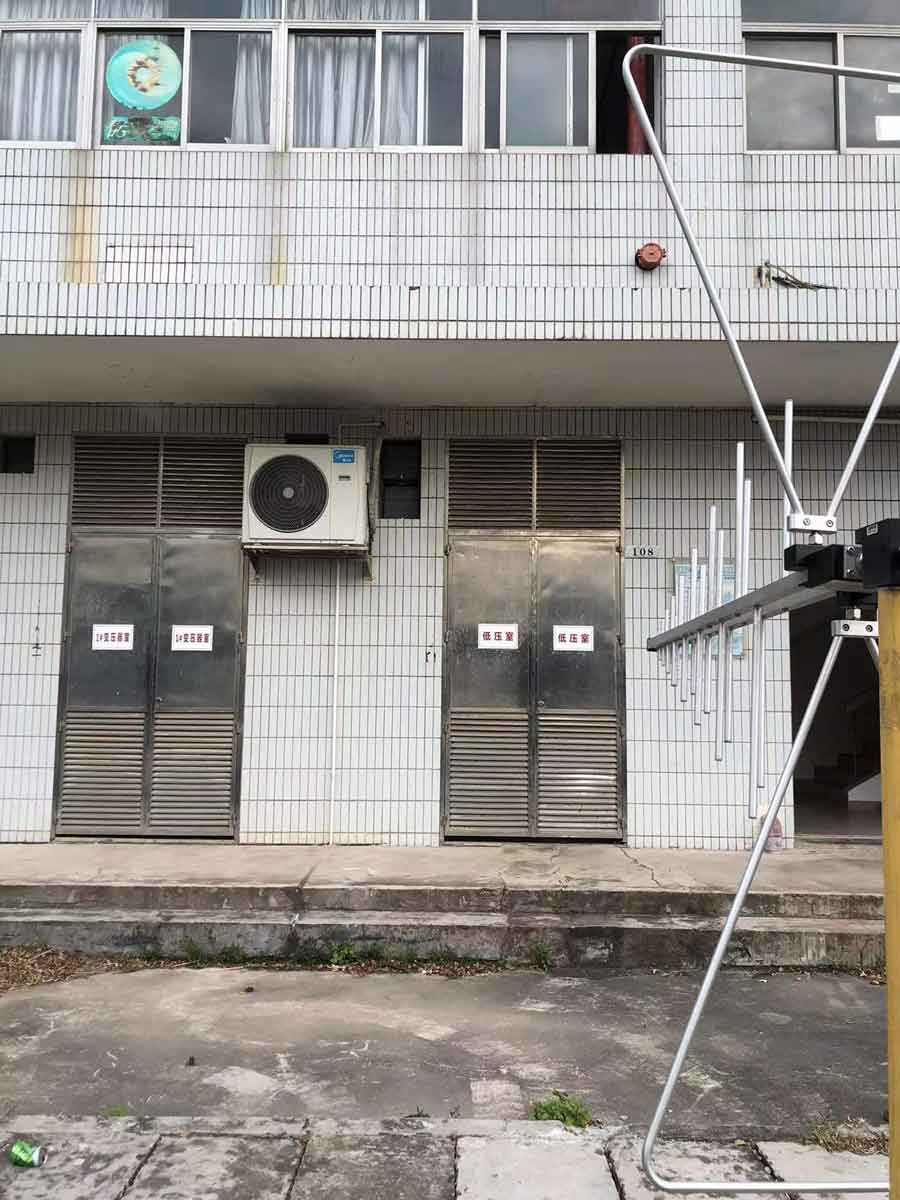
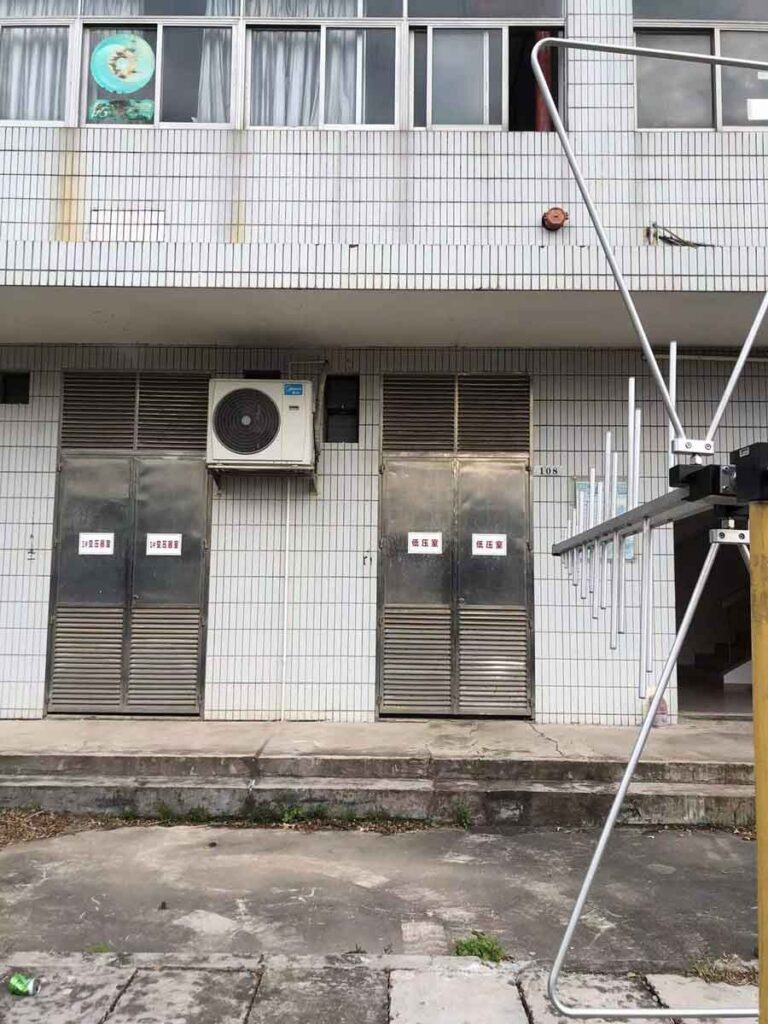
On-site environmental electromagnetic interference investigation, according to different interference phenomena at the user site, investigation is carried out in different parts and areas to solve the electromagnetic interference problem of the customer environment.

Similarly, environmental electromagnetic interference monitoring can be carried out to prevent unknown electromagnetic wave interference and other harmful interference that affects environmental communications.

EMI investigation

You are welcome to consult us, please contact David Zeng info@emc.wiki or 1513888718@qq.com , We can provide one-stop testing, EMC debug and certification services.

Canada – ISED IC ID certification

All wireless electronic and electrical products sold to Canada must apply for the Canadian ISED IC ID certification.

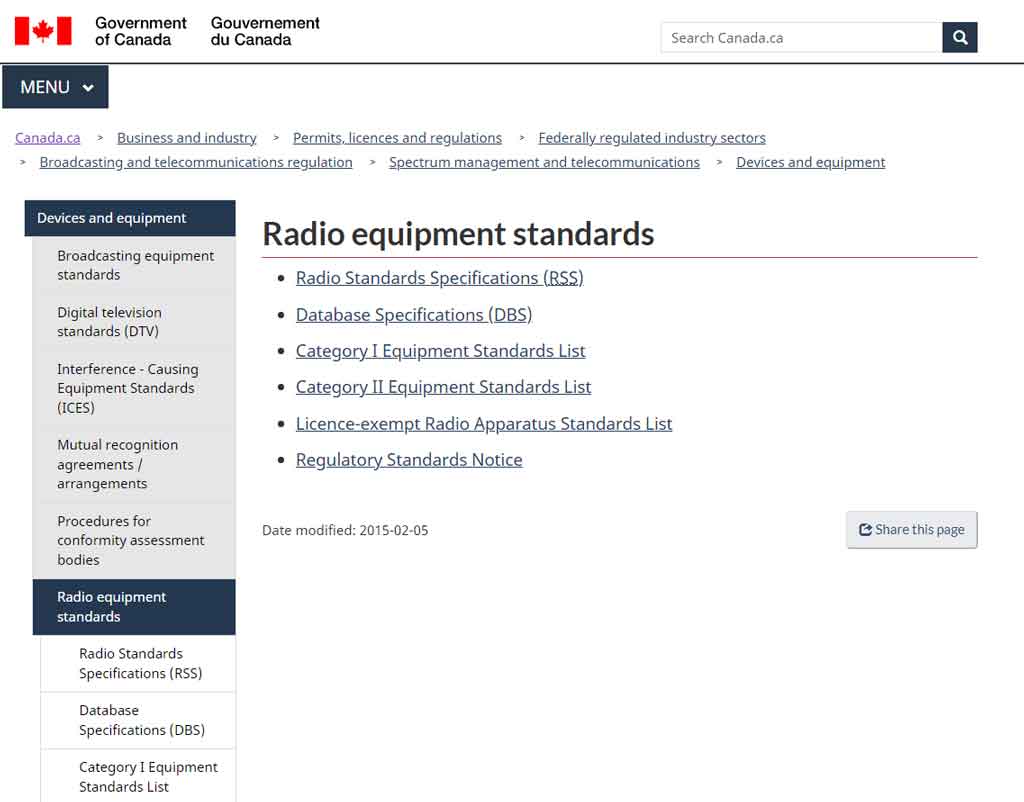
Radio equipment standards

  • Radio Standards Specifications (RSS)
  • Database Specifications (DBS)
  • Category I Equipment Standards List
  • Category II Equipment Standards List
  • Licence-exempt Radio Apparatus Standards List
  • Regulatory Standards Notice

Category I Equipment Standards List

  • RSS-Gen — General Requirements for Compliance of Radio Apparatus
  • RSS-HAC — Hearing Aid Compatibility and Volume Control
  • RSS-102 — Radio Frequency (RF) Exposure Compliance of Radiocommunication Apparatus (All Frequency Bands)
  • RSS-111 — Broadband Public Safety Equipment Operating in the Band 4940-4990 MHz
  • RSS-112 — Land Mobile and Fixed Equipment Operating in the Band 1670-1675 MHz
  • RSS-117 — Land and Coast Station Transmitters Using A1, A2, A3, A2H, or A3H Emissions Operating in the 200 – 535 kHz Band
  • RSS-119 — Land Mobile and Fixed Equipment Operating in the Frequency Range 27.41-960 MHz
  • RSS-123 — Licensed Low-Power Radio Apparatus
  • RSS-125 — Land Mobile and Fixed Radio Transmitters and Receivers, 1.705 to 50.0 MHz, Primarily Amplitude Modulated
  • RSS-127 — Air-Ground Equipment Operating in the Bands 849-851 MHz and 894-896 MHz
  • RSS-129 – 800 MHz Dual-Mode CDMA Cellular Telephones
    Withdrawn January 2013
  • RSS-130 — Mobile Broadband Services (MBS) Equipment Operating in the Frequency Bands 698-756 MHz and 777-787 MHz
  • RSS-131 — Zone Enhancers for the Land Mobile Service
  • RSS-132 — 800 MHz Cellular Telephones Employing New Technologies
  • RSS-133 – 2 GHz Personal Communication Services
  • RSS-134 — 900 MHz Narrowband Personal Communications Services
  • RSS-135 — Digital Scanner Receivers
  • RSS-136 — Land and Mobile Station Radiotelephone Transmitters and Receivers Operating in the 26.960 – 27.410 MHz General Radio Service Band
    Updated and renumbered to RSS-236 in November 2012
  • RSS-137 — Location and Monitoring Service (902-928 MHz)
  • RSS-138 — Commercial Shipborne Radar in the 2900-3100 MHz, 5470-5650 MHz and 9225-9500 MHz Bands
    Replaced in July 2013 by RSS-238
  • RSS-139 — Advanced Wireless Services (AWS) Equipment Operating in the Bands 1710-1780 MHz and 2110-2180 MHz
  • RSS-140 — Equipment Operating in the Public Safety Broadband Frequency Bands 758-768 MHz and 788-798 MHz
  • RSS-141 — Aeronautical Radiocommunication Equipment in the Frequency Band 117.975-137 MHz
  • RSS-142 — Narrowband Multipoint Communication Systems in the Bands 1429.5-1432 MHz
  • RSS-170 — Mobile Earth Stations (MESs) and Ancillary Terrestrial Component (ATC) Equipment Operating in the Mobile-Satellite Service (MSS) Bands
  • RSS-181 — Coast and Ship Station Equipment Operating in the Maritime Service in the Frequency Range 1605-28000 kHz
  • RSS-182 — Maritime Radio Transmitters and Receivers in the Band 156-162.5 MHz
  • RSS-187 — Emergency Position Indicating Radio Beacons, Emergency Locator Transmitters and Personal Locato Beaconsr
    Replaced by RSS-287
  • RSS-188 — Global Maritime Distress and Safety System (GMDSS)
    Updated and renumbered to RSS-288 in January 2012
  • RSS-191 — Local Multipoint Communication Systems in the Band 25.35-28.35 GHz; Point-to-Point and Point-to-Multipoint Broadband Communication Systems in the Bands 24.25-24.45 GHz and 25.05-25.25 GHz; and Point-to-Multipoint Broadband Communications in the Band 38.6-40.0 GHz
  • RSS-192 — Fixed Wireless Access Equipment Operating in the Band 3450 – 3650 MHz
  • RSS-193 — Multipoint and Point-to-Point Communication Systems (MCS) in the Fixed Service Operating in the 2150-2160 MHz, 2500-2596 MHz and 2686-2690 MHz Bands
    Rescinded in January 2012
  • RSS-194 — Fixed Wireless Access Equipment Operating in the Band 953-960 MHz
  • RSS-195 — Wireless Communications Service Equipment Operating in the Bands 2305-2320 MHz and 2345-2360 MHz
  • RSS-196 — Point-to-Multipoint Broadband Equipment Operating in the Bands 512-608 MHz and 614-698 MHz for Rural Remote Broadband Systems (RRBS) (TV Channels 21 to 51)
  • RSS-197 — Wireless Broadband Access Equipment Operating in the Band 3650-3700 MHz
  • RSS-199 — Broadband Radio Service (BRS) Equipment Operating in the Band 2500-2690 MHz
  • RSS-210 — Licence-Exempt Radio Apparatus
  • RSS-211 — Level Probing Radar Equipment
  • RSS-213 — 2 GHz Licence-exempt Personal Communications Service Devices (LE-PCS)
  • RSS-215 — Analogue Scanner Receivers
  • RSS-216 — Wireless Power Transfer Devices (Wireless Chargers)
  • RSS-220 — Devices Using Ultra-Wideband (UWB) Technology
  • RSS-222 — White Space Devices (WSDs)
  • RSS-236 — General Radio Service Equipment Operating in the Band 26.960 to 27.410 MHz (Citizens Band)
  • RSS-238 — Shipborne Radar in the 2900-3100 MHz and 9225-9500 MHz Bands
  • RSS-243 — Active Medical Implants Operating in the 401-406 MHz Band
  • RSS-244 — Medical Devices Operating in the Band 413-457 MHz
  • RSS-246 — Ultra-Low Power (ULP) Wireless Medical Capsule Endoscopy Devices Operating in the 430-440 MHz Band
  • RSS-247 — Digital Transmission Systems (DTSs), Frequency Hopping Systems (FHSs) and Licence-Exempt Local Area Network (LE-LAN) Devices
  • RSS-251 — Vehicular Radar and Airport Fixed or Mobile Radar in the 76-81 GHz Frequency Band
  • RSS-252 — Intelligent Transportation Systems — Dedicated Short Range Communications (DSRC) — On-Board Unit (OBU)
  • RSS-287 – Emergency Position Indicating Radio Beacons (EPIRB), Emergency Locator Transmitters (ELT), Personal Locator Beacons (PLB), and Maritime Survivor Locator Devices (MSLD)
  • RSS-288 — Global Maritime Distress and Safety System (GMDSS)
  • BETS-1 — Technical Standards and Requirements for Low Power Announce Transmitters in the Frequency Bands 525-1,705 kHz and 88-107.5 MHz
  • BETS-4 — Technical Standards and Requirements for Television Broadcasting Transmitters
  • BETS-5 — Technical Standards and Requirements for AM Broadcasting Transmitters
  • BETS-6 — Technical Standards and Requirements for FM Broadcasting Transmitters
  • BETS-8 — Technical Standards and Requirements for FM Transmitters Operating in Small Remote Communities
  • BETS-9 — Technical Standards and Requirements for Television Transmitters Operating in Small Remote Communities

Date modified: 2020-11-04

Category II Equipment Standards List

  • ICES-Gen — General Requirements for Compliance of Interference-Causing Equipment
  • ICES-001  Industrial, Scientific and Medical Radio Frequency Generators
  • ICES-002 — Vehicles, Boats and Other Devices Propelled by an Internal Combustion Engine, Electrical Means or Both
  • ICES-003 — Information Technology Equipment (ITE) – Limits and methods of measurement
  • ICES-004 — Alternating Current High Voltage Power Systems
  • ICES-005 — Lighting Equipment
  • ICES-006 — AC Wire Carrier Current Devices (Unintentional Radiators)
  • ICES-008  Cable Distribution Networks
  • RSS-Gen  General Requirements and Information for the Certification of Radiocommunication Equipment
  • RSS-102 — Radio Frequency Exposure Compliance of Radiocommunication Apparatus (All Frequency Bands)
  • RSS-216 — Wireless Power Transfer Devices (Wireless Chargers)
  • RSS-310 — Licence-Exempt Radio Apparatus
  • BETS-3  Technical Standards and Requirements for Radio Apparatus that Form Part of a Master Antenna Television (MATV) Broadcasting Undertaking
  • BETS-7  Technical Standards and Requirements for Radio Apparatus Capable of Receiving Television Broadcasting

Date modified: 2020-11-04

Official website – Canada – ISED

https://www.ic.gc.ca/eic/site/smt-gst.nsf/eng/h_sf06128.html

You are welcome to consult us, please contact David Zeng info@emc.wiki or 1513888718@qq.com , We can provide one-stop testing, EMC debug and certification services.
Canada – ISED IC certification

All electronic and electrical products sold to Canada other except wireless must apply for Canadian ISED IC certification.

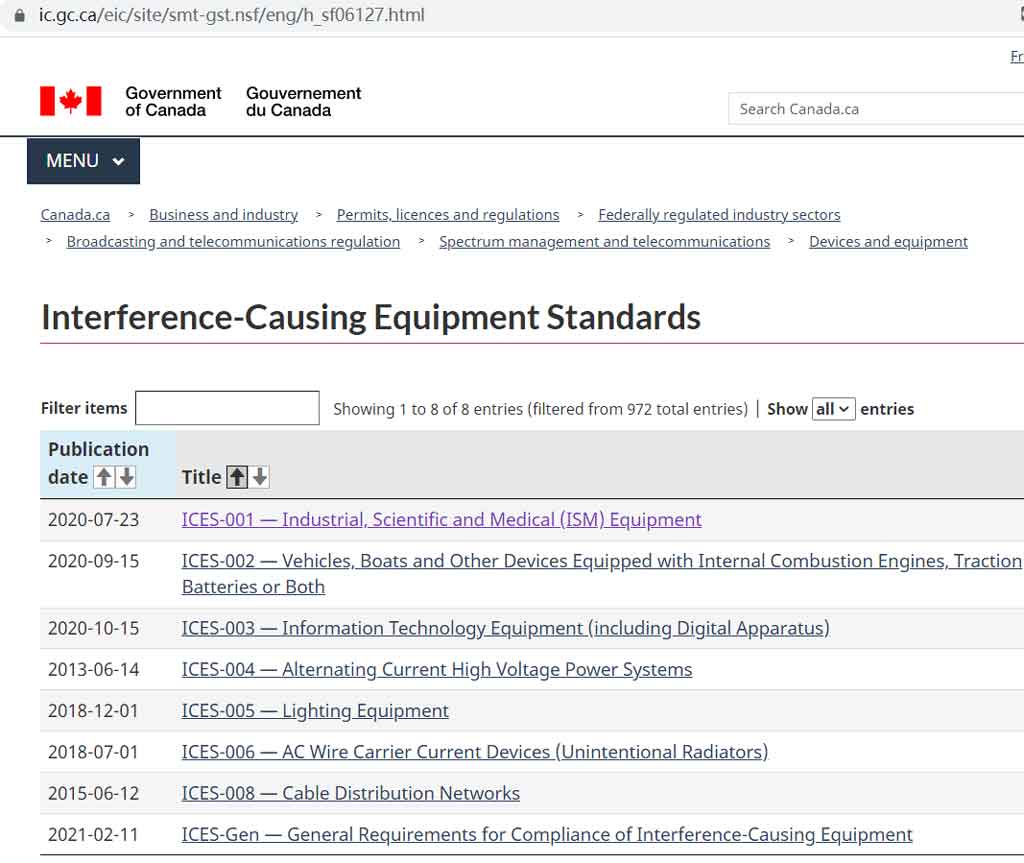
Canada ICES Standards

2020-07-23ICES-001 — Industrial, Scientific and Medical (ISM) Equipment
2020-09-15ICES-002 — Vehicles, Boats and Other Devices Equipped with Internal Combustion Engines, Traction Batteries or Both
2020-10-15ICES-003 — Information Technology Equipment (including Digital Apparatus)
2013-06-14ICES-004 — Alternating Current High Voltage Power Systems
2018-12-01ICES-005 — Lighting Equipment
2018-07-01ICES-006 — AC Wire Carrier Current Devices (Unintentional Radiators)
2015-06-12ICES-008 — Cable Distribution Networks
2021-02-11ICES-Gen — General Requirements for Compliance of Interference-Causing Equipment

Official website

https://www.ic.gc.ca/eic/site/smt-gst.nsf/eng/h_sf06127.html

You are welcome to consult us, please contact David Zeng info@emc.wiki or 1513888718@qq.com , We can provide one-stop testing, EMC debug and certification services.
FCC SDOC

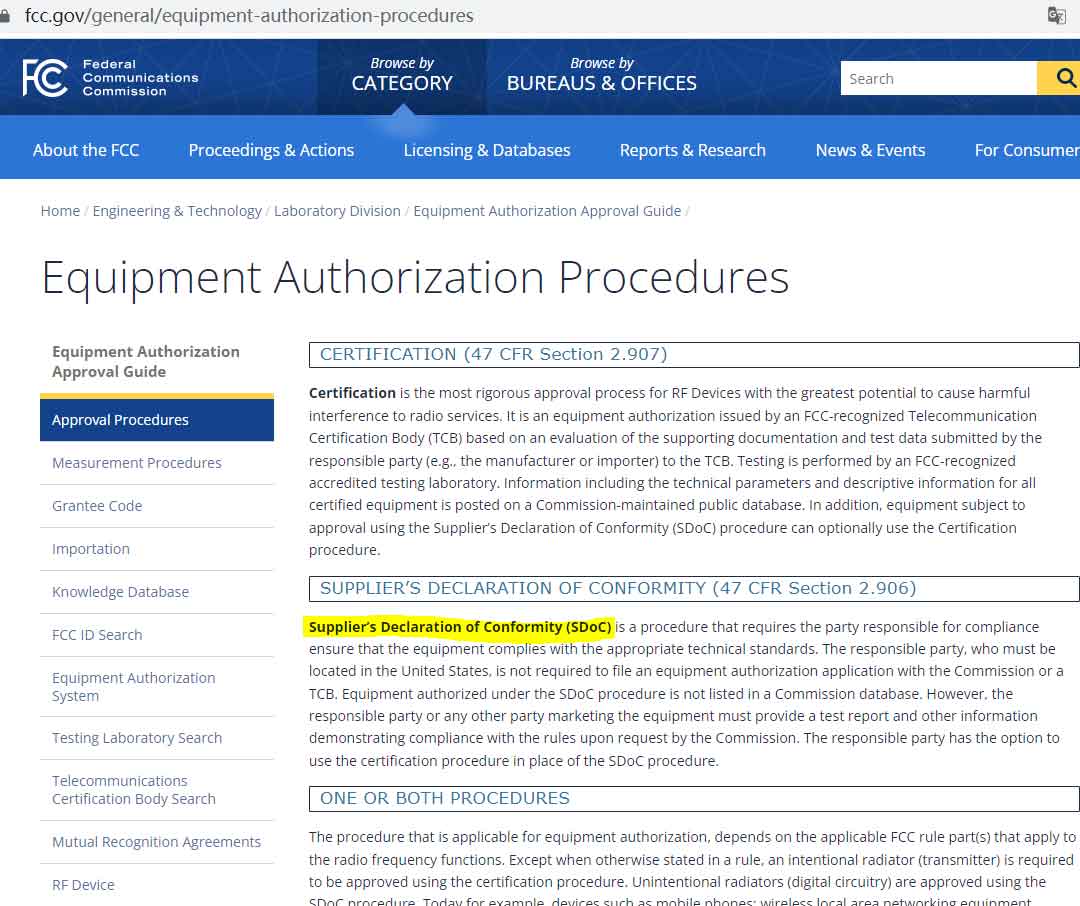
The United States FCC SDOC refers to Supplier’s Declaration of Conformity, or Supplier’s Declaration of Conformity, or SDoC for short. The equipment supplier (note: the supplier must be a local company in the United States) will test the equipment that meets the specified standards or requirements, and the equipment that meets the regulations must provide relevant documents (such as SDoC declaration documents) to provide proof to the public. The SDoC policy simplifies the previously complicated FCC certification requirements and further reduces the burden on enterprises.

FCC SDOC

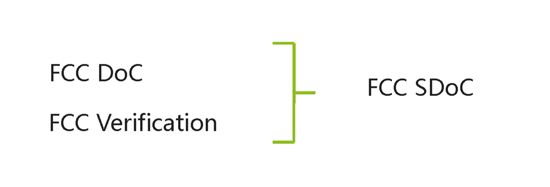
SDOC certification means that all electronic and electrical products going to the United States need to comply with FCC PART 15B of the United States, that is, all previous electronic and electrical products that comply with FCC VoC and FCC DoC.

FCC SDoC changes

  • There are clear requirements for the person in charge of the product, and the contact information of the U.S. company needs to be provided. The responsible party can be the importer or consignee or customs broker. At the same time, after November 2, 2018, the FCC DOC and FCC VOC will be invalid;
  • All SDoC products can independently choose whether to mark the FCC Logo;
  • The authentication methods of our common equipment have undergone major changes. Except for wireless transmission products/scanning receivers/power line broadband access/radar detection products, FCC ID must be made, and all other products can choose FCC ID or SDOC.

SDoC product range

In applying for FCC certification, FCC SDoC applies to ordinary products without wireless functions, such as displays, ordinary household appliances, lamps, etc. Including personal computers and peripheral equipment; household appliances; electric tools; audio and video products; lamps; toys; security products, etc. Such as monitors, mice, refrigerators, electric kettles, hair dryers, LED lamps, electronic toys, ordinary access control and other products.

FCC Class A or B

§ 15.3 Definitions.

(h) Class A digital device. A digital device that is marketed for use in a commercial,industrial or business environment,exclusive of a device which is marketed for use by the general publicor is intended to be used in the home.

(i) Class B digital device. A digital device that is marketed for use in a residential environment notwithstanding use in commercial, business and industrial environments. Examples of such devices include, but are not limited to, personal computers, calculators, and similar electronic devices that are marketed for use by the general public.

NOTE: The responsible party may also qualify a device intended to be marketed in a commercial, business or industrial environment as a Class B device, and in fact is encouraged to do so, provided the device complies with the technical specifications for a Class B digital device. In the event that a particular type of device has been found to repeatedly cause harmful interference to radio communications, the Commission may classify such a digital device as a Class B digital device, regardless of its intended use.

FCC SDOC conducted emission limit

§15.107 Conducted limits.

(a) Except for Class A digital devices, for equipment that is designed to be connected to the public utility (AC) power line, the radio frequency voltage that is conducted back onto the AC power line on any frequency or frequencies within the band 150 kHz to 30 MHz shall not exceed the limits in the following table, as measured using a 50 μH/50 ohms line impedance stabilization network (LISN). Compliance with the provisions of this paragraph shall be based on the measurement of the radio frequency voltage between each power line and ground at the power terminal. The lower limit applies at the band edges.

Frequency of emission (MHz)Conducted limit (dBμV)Conducted limit (dBμV)
Quasi-peakAverage
0.15-0.566 to 56*56 to 46*
0.5-55646
5-306050

(b) For a Class A digital device that is designed to be connected to the public utility (AC) power line, the radio frequency voltage that is conducted back onto the AC power line on any frequency or frequencies within the band 150 kHz to 30 MHz shall not exceed the limits in the following table, as measured using a 50 μH/50 ohms LISN. Compliance with the provisions of this paragraph shall be based on the measurement of the radio frequency voltage between each power line and ground at the power terminal. The lower limit applies at the boundary between the frequency ranges.

Frequency of emission (MHz)Conducted limit (dBμV)Conducted limit (dBμV)
Quasi-peakAverage
0.15-0.57966
0.5-307360

FCC SDOC Radiation Test Limit Request

§15.109 Radiated emission limits.

(a) Except for Class A digital devices, the field strength of radiated emissions from unintentional radiators at a distance of 3 meters shall not exceed the following values:

Frequency of emission (MHz)Field strength (microvolts/meter)
30-88100
88-216150
216-960200
Above 960500

(b) The field strength of radiated emissions from a Class A digital device, as determined at a distance of 10 meters, shall not exceed the following:

Frequency of emission (MHz)Field strength (microvolts/meter)
30-8890
88-216150
216-960210
Above 960300

Typical question and answer

  1. Should the lighting products be grade A or grade B? Answer: According to the standard lamps, if they are installed in the home, they must meet the B-level limit requirements. If they are installed in outdoor or industrial environments, they can use the A-level limit requirements.
  2. Is FCC Part 15 Grade B easy to pass, or is FCC Part 15 Grade A easy to pass? Answer: According to the limits stipulated in the standard, the limit of Class A is significantly higher than the limit of Class B, which means that Class A is easier to pass in the case of the same sample.
  3. Can FCC test data of A and B levels be interchangeable? If the data is tested to level B, if level B does not meet the requirements, can it be replaced with level A? Answer: Of course, it can be interchanged. The data will not change. Only the limit value is changed. Generally, the test software can easily exchange the A-level and B-level limits. Please confirm and communicate with the test engineer. For example, if you are taller than Yao Ming and taller than Zhangwei, your height remains the same, and what you change is just a reference.

You are welcome to consult us, please contact David Zeng info@emc.wiki or 1513888718@qq.com , We can provide one-stop testing, EMC debug and certification services.